
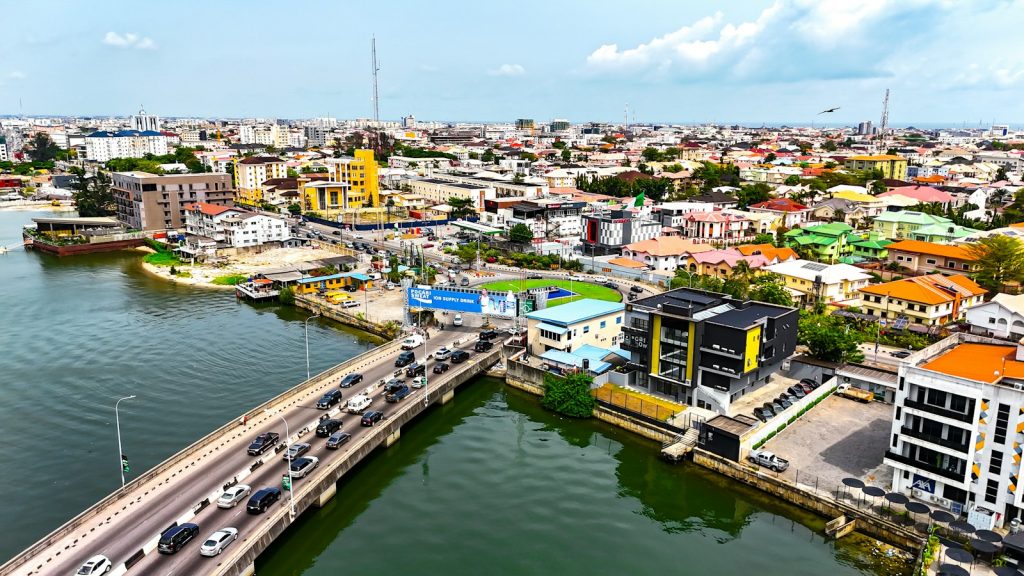

Last updated: 25 September 2026. We refresh this page every rainy season.
On 19 September 2026 Lagos State told residents of named low-lying areas to move to higher ground, after the Nigeria Hydrological Services Agency (NiHSA) issued a seven-day flood alert covering 19–25 September. The areas named include Eti-Osa, Lagos Island, Oke-Ira Nla (Ajah), Kirikiri, the Ilaje waterfront, Isheri North, Kara, Itowolo, Ajegunle, Majidun, Ogolonto and parts of Agboyi. If you are buying anywhere near these places, a flood check belongs in your due diligence right next to the title search. It is not something to leave to the agent.
News stories about flood alerts run for a week and then disappear. Buyers need the information for much longer than that. A plot you pay for in December was either under water in September or it wasn’t, and the seller usually knows which. This page collects the official list in one place and then shows you how to check a specific plot yourself.
The areas named in the September 2026 alert
These come straight from the Lagos State Government’s alert as reported by TVC News, The Will and The Guardian. We haven’t added any areas to the list or taken any off.
| Zone | Areas named | Main risk |
|---|---|---|
| Coast and Lagos Island | Eti-Osa, Lagos Island, Oke-Ira Nla (Ajah), Kirikiri (seaport area) | Heavy rainfall plus tidal and lagoon backflow |
| Waterfront jetties | Ilaje Waterfront Jetty, Jetty Terminal B | Rising lagoon levels |
| Ogun River, downstream | Isheri North, Kara, Itowolo, Ajegunle, Majidun, Ogolonto, parts of Agboyi | River flooding when water is released from the Oyan Dam upstream |
Beyond this week’s alert: what the 2026 outlook says
NiHSA’s 2026 Annual Flood Outlook identifies 14,118 communities in 266 local government areas across 33 states and the FCT as at risk of flooding this year. Lagos is listed for flash and urban flooding, along with Abuja, Ibadan, Port Harcourt and Kano. Reporting on the outlook and on the Lagos Ministry of Environment’s briefings points to three patterns:
- Lekki, Ajah and Badagry: above-normal rainfall, forecast at up to 3,030mm, combined with “tidal locks”. When the lagoon is high, rainwater has nowhere to drain.
- Ikorodu and Isheri: riverine flooding linked to releases from the Oyan Dam.
- Surulere and Mushin: flash floods caused mainly by blocked drains rather than geography. These can be fixed, but only if the drains are actually cleared.
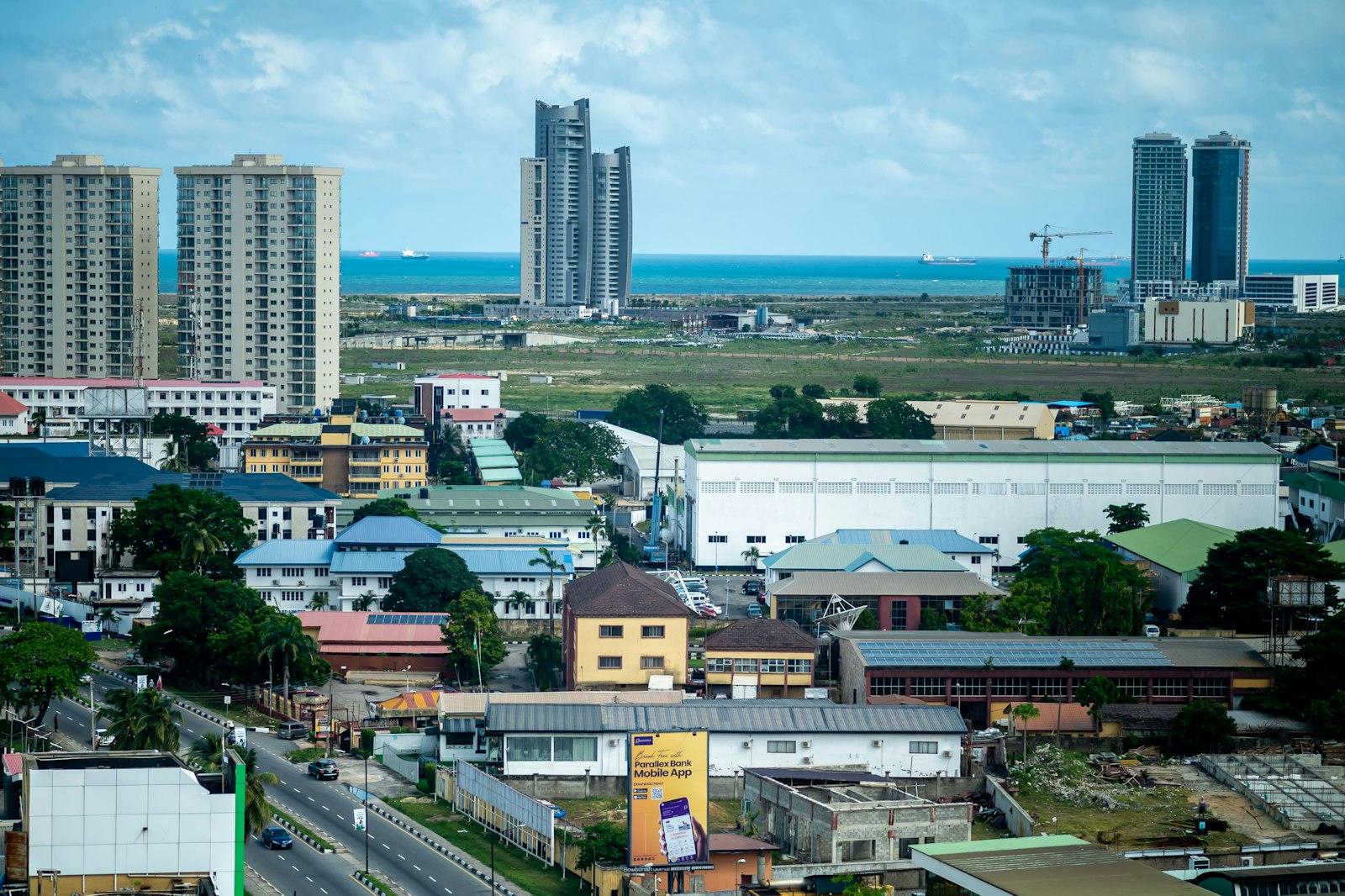
This list isn’t complete. An area that doesn’t appear here isn’t automatically safe. Flooding in Lagos happens street by street, and two plots 300 metres apart can have very different histories. That’s why the next section matters more than any list.
How to check a specific plot before you pay
You can do most of this in one visit plus a couple of phone calls. If you’re abroad, whoever inspects for you should do every step and send photos and video, not a verbal “it’s fine”.
- Visit during the rains, ideally the day after heavy rain. A dry-season inspection shows you nothing. Between June and October, go the morning after a downpour and look for standing water on the plot, on the access road and at the estate gate.
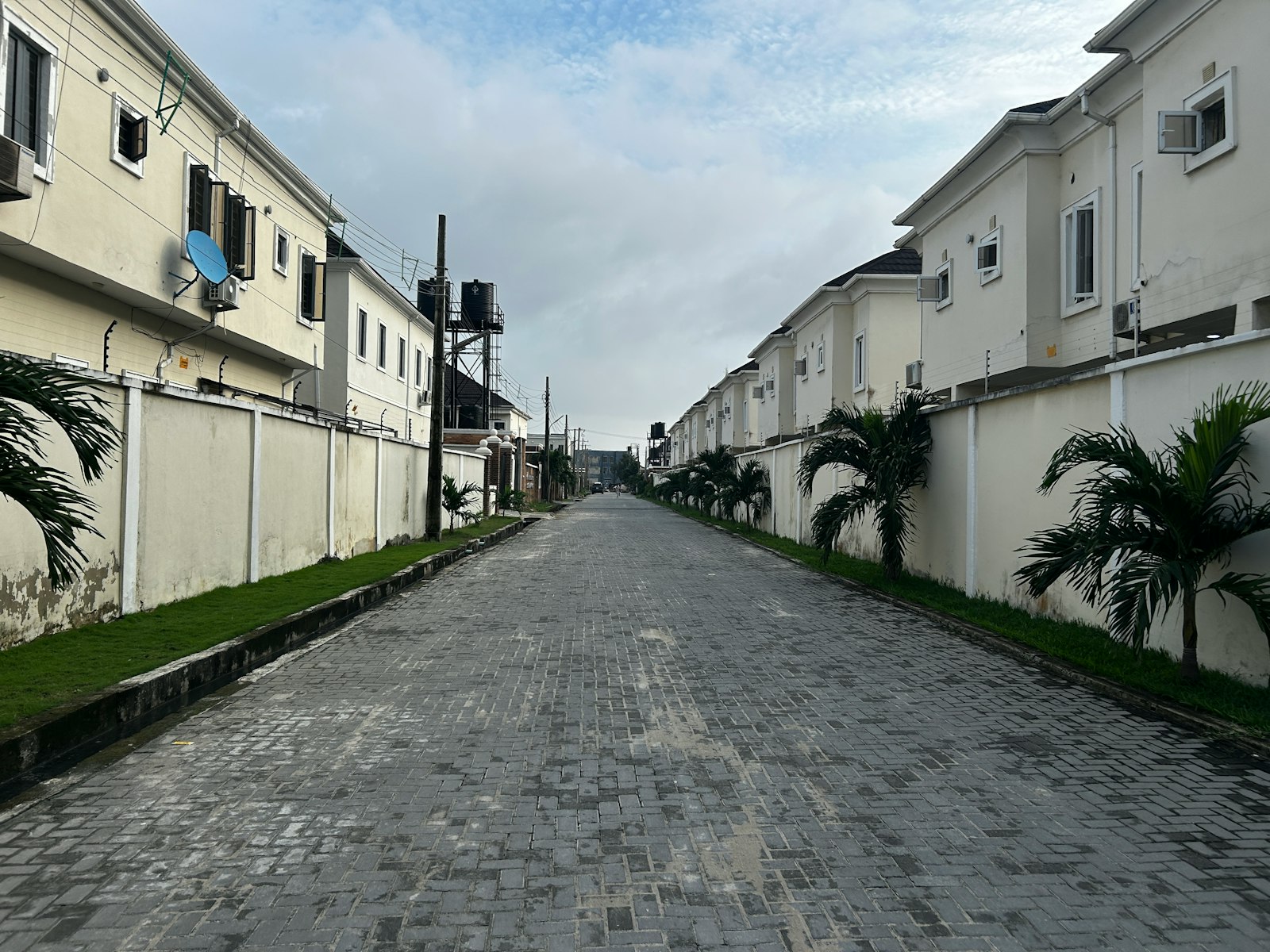
- Compare the plot’s level with the road. If the plot sits below the road, run-off from the road ends up on it. Look at the neighbouring houses too: if they’ve raised their fences or built high ground floors, they’re dealing with water.
- Look for tide lines. Stains, algae bands or peeling paint at a consistent height on fences and walls are a record of past flood levels. Photograph them.
- Ask people who have no reason to sell to you. Shop owners, security guards, okada riders and long-term tenants will tell you where the water reached last year. The agent and the seller’s family won’t.
- Follow the drainage. Find out where water from the street goes. Is there a covered drain, and is it clear? Does it lead to a canal or just stop? A drain full of refuse is a flood waiting for the next storm.
- Check the ground itself. Soft, dark or waterlogged soil, reeds or marsh grass, or a plot that has clearly been filled with sand in the last few years all point to reclaimed or swampy land.
- Ask about drainage clearance before you build. Lagos requires drainage clearance from the Office of Drainage Services for developments in flood-prone areas. It covers setbacks from drainage channels and minimum building heights. Confirm the current process with the office and not with the seller.
- Check that the land isn’t on a drainage right-of-way or setback. The Lagos State government has demolished buildings on drainage channels. This is part of the same search as excision and gazette status. See our excision and gazette guide and how to verify land before you buy.
“Sand-filled” and “reclaimed” in an advert are warning signs. Sand-filling isn’t illegal, and a lot of Lekki was built on reclaimed land. But the words tell you the land was once wet, and it may still try to be. Ask who did the filling, when, how deep, and whether there’s a soil test. On swampy or reclaimed land along the Lekki–Ajah axis, sand-filling and pile foundations can add ₦3M–₦8M (~$1,935–$5,160) to a build. That cost belongs in your budget before you agree a price.
What flood risk does to price, insurance and resale
| Area of impact | What happens | What to do |
|---|---|---|
| Build cost | More sand-fill, deeper or piled foundations, a raised ground floor and better drainage | Get an engineer’s estimate before you agree the land price, and use it to negotiate |
| Insurance | Flood cover can be excluded, loaded with a higher premium, or refused on properties with known flooding | Ask an insurer for a quote on the specific address before you buy, not after |
| Rental demand | Tenants who have been flooded out once don’t renew, and word travels within an estate | Ask neighbouring landlords how quickly their units re-let |
| Resale | Informed buyers discount for it, and every rainy season brings the problem back into view | Price the risk in when you buy so you aren’t caught out when you sell |
What most buyers leave out
The estate road matters as much as the plot. A raised, dry plot is little use if the only access road is under knee-deep water for three months of the year. Check the whole route from the main road to your gate.
Flood risk changes over time. New estates upstream, filled-in wetlands and blocked canals can push water onto land that used to stay dry. What matters is the drainage around the plot today, not the fact that “it has never flooded”.
If you are buying from abroad, a video is not an inspection. Ask for footage taken on a named date during the rains, showing the road, the drain and the neighbours’ walls. Get the date confirmed in writing.
Where this fits in your due diligence
Flood risk is one check among several. Before paying for land in Lagos, you also need a clean title, the right excision or gazette status, and a realistic view of every fee involved:
- How to verify land title in Lagos, step by step
- Land titles explained: C of O, gazette, excision and Governor’s Consent
- The true total cost of buying land in Nigeria
- If you are looking along the Lekki corridor: buying land in Ibeju-Lekki safely, buying land in Epe safely and Ajah vs Lekki
- If you’re still choosing an area: where to buy land in Lagos by budget
Checking a plot before you pay? Our free buyer’s checklist covers title, excision, survey, flood and every other check in one place. Get the checklist
Frequently asked questions
Which areas of Lagos flood the most?
The September 2026 alert named Eti-Osa, Lagos Island, Oke-Ira Nla (Ajah), Kirikiri, the Ilaje waterfront, and communities along the lower Ogun River: Isheri North, Kara, Itowolo, Ajegunle, Majidun, Ogolonto and parts of Agboyi. NiHSA’s outlook also flags Lekki, Badagry, Ikorodu, Surulere and Mushin. Conditions vary a great deal from one street to the next, so check the specific plot.
Is it safe to buy land in Lekki or Ajah?
It can be, but only after a plot-level check. Parts of the corridor are reclaimed or low-lying, and some plots need significant sand-filling and piled foundations. Visit during the rains, check the level against the road, and budget for extra foundation costs before you agree a price.
When is flood season in Lagos?
The main rainy season runs roughly from April to October, and the heaviest flooding tends to come between June and October. The Ogun River communities face extra risk whenever water is released from the Oyan Dam.
How do I know if land was sand-filled?
Ask the seller directly and get the answer in writing. On site, look for fresh, uniform sand that doesn’t match the neighbouring plots, marsh vegetation at the edges, and soft ground. A soil test by an engineer is the only reliable answer.
Do I need drainage clearance to build in Lagos?
Developments in flood-prone areas need drainage clearance from the Office of Drainage Services. Confirm the current requirements with the office before you design or build.
Methodology and sources. The list of affected areas comes from the Lagos State Government’s flood alert of September 2026, as reported by TVC News, The Will and The Guardian. National figures are from the NiHSA 2026 Annual Flood Outlook. The sand-fill and foundation cost range is LON’s own estimate, converted at ₦1,550/$. We haven’t added areas that the government did not name. Next scheduled update: June 2027, at the start of the rainy season, or sooner if a new alert is issued.
Cite this page: Lands of Nigeria, “Flood-Prone Areas in Lagos (2026)”, updated 25 September 2026.
