
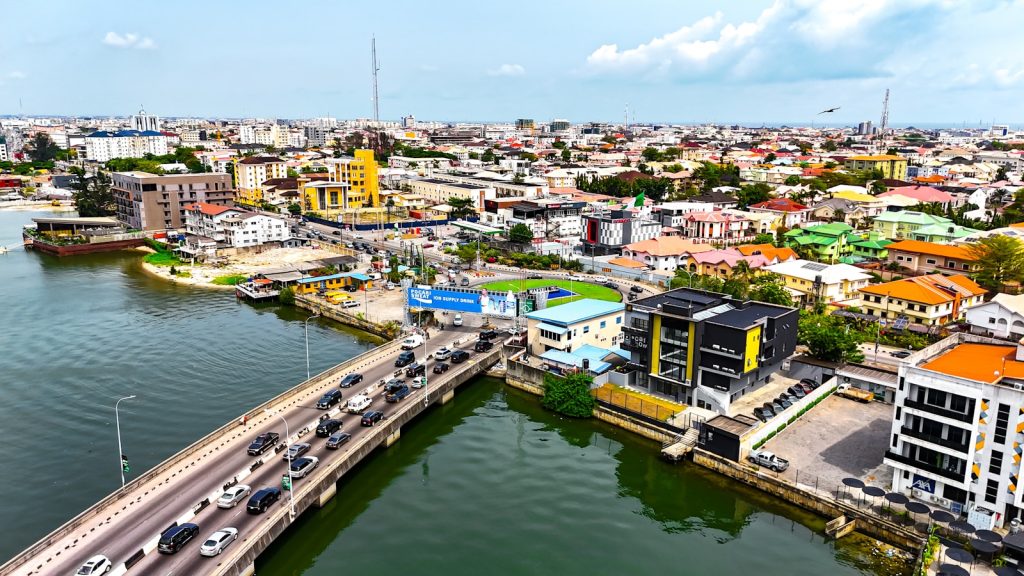

Two things move Nigerian property values in 2026: big roads and better financing. On the roads side, the Lagos–Calabar Coastal Highway, Lekki Deep Sea Port and the Dangote Refinery are pulling money toward Ibeju-Lekki and the Lagos–Ogun corridor. On the money side, the FMBN mortgage ceiling just jumped to ₦85,000,000 (~$60,000), and a diaspora mortgage now offers 9% interest with 30% equity, payable in foreign currency. Real estate is about 13.4% of GDP (~₦41 trillion, ~$29bn). Here’s what all of it means for what you can actually buy. (Figures at ₦1,420/$, July 2026.)
Every few months a new “Nigeria real estate is booming” headline lands. Most of them are noise. What actually matters to a buyer or a diaspora investor is narrower: does a specific project or policy change what you can afford and where it’s smart to buy? This is a rebuild of our earlier 2026 outlook, focused only on the changes with a real, traceable effect — and what to do about each.
The infrastructure that’s actually moving prices
Roads and ports don’t lift every area equally. They lift the land near interchanges, ports and stations, and they do it before completion, as speculators price in the future. Here’s where the money is following steel and asphalt in 2026.
| Project | Areas it lifts | What buyers should note |
|---|---|---|
| Lagos–Calabar Coastal Highway | Ibeju-Lekki, Lekki Free Zone, Eleko, Epe fringe | Values rise near confirmed interchanges — not the whole route |
| Lekki Deep Sea Port + Dangote Refinery | Ibeju-Lekki industrial belt | Strong long-term demand, but much land here is under acquisition — verify excision |
| Badagry–Sokoto Superhighway | Lagos–Ogun (Badagry, Ado-Odo/Ota) and northward | Right-of-way demolitions are live — never buy or build inside the corridor setback |
| Renewed Hope Cities (6 geo-political zones) | Ibeju-Lekki (Lagos), Karsana (Abuja), Kano and others | FMBN funded 1,500 units at the Ibeju-Lekki city — nearby land is being repriced |
Sources: LON reporting and 2026 federal project updates. Verify title and acquisition status before buying near any of these.
The pattern is old and reliable: infrastructure creates value at the nodes. We mapped this for the coast in which coastal-highway areas are actually gaining value, and the “which areas by budget” question in where to buy land in Lagos by budget.
Watch out: Infrastructure hype is scam fuel. Around every big project, sellers market acquired or non-excised land as “coastal highway plots.” In February 2026 Lagos flagged 176 estates as illegal, many along these exact corridors. Proximity to a road is not a title.
The financing changes that widen who can buy
For years the honest answer to “can I get a mortgage in Nigeria?” was “probably not, and not at a rate you’d want.” That’s shifting — slowly, but concretely — in 2026.
| Change | Detail | ~ USD |
|---|---|---|
| FMBN mortgage ceiling raised | Up to ₦85,000,000, targeting ~2,000 mortgages a year | ~$60,000 |
| NHF equity access | Contributors can use up to 25% of their retirement savings as home-purchase equity | — |
| NHF Diaspora Mortgage | 9% interest, 30% equity, contribute in FX, no travel required | — |
| National Housing Finance Authority (proposed) | New body to expand mortgage access and housing finance | — |
Sources: Vanguard, 26 July 2026; Federal Mortgage Bank of Nigeria.
Read the fine print before you celebrate. The FMBN targets roughly 2,000 mortgages a year against a housing gap the ministry itself puts at about 15 million inadequate units — so this is real relief for a lucky few, not a market-wide fix. Still, if you’re an NHF contributor or a diaspora buyer, the numbers now work in ways they didn’t 18 months ago. We break down the diaspora route in home loans for Nigerians abroad and the new body in what the National Housing Finance Authority means for buyers.
What most “market outlook” pieces leave out
The outlook articles love the headline numbers — ₦41 trillion, 13.4% of GDP, “2 trillion dollar sector.” Here’s what they don’t tell you. First, GDP share doesn’t help you buy a house; financing access and title security do. Second, the projects that raise land values are the same ones that demolish land that’s in the wrong place — the Badagry–Sokoto right-of-way losses in Ogun are a live 2026 example. Third, high interest rates and construction costs mean 2026 is a consolidation year, not a gold rush. The winners this year are patient buyers who verify, not the ones chasing the loudest billboard.
Weighing a plot near new infrastructure? Run the numbers before the hype runs you. The Feasibility Studio models build and holding costs against realistic appreciation.
What to actually do in 2026
If you’re buying near infrastructure: confirm the exact alignment and interchange locations, buy at a confirmed node rather than a vague “corridor,” and verify excision before anything else. If you’re financing: check your NHF standing, and if you’re abroad, compare the 9% diaspora mortgage against paying cash — sometimes the leverage is worth it, sometimes the FX risk isn’t. And whatever the headlines say, treat every “hot area” claim as a marketing line until the title proves it. Our honest take on returns is in is Nigerian land actually a good investment in 2026.
Frequently asked questions
Does new infrastructure guarantee my land will appreciate?
No. Values rise near confirmed interchanges, ports and stations — not evenly along a route. And appreciation means nothing if the title is bad or the plot sits in a right-of-way.
What’s the new FMBN mortgage ceiling?
₦85,000,000 (~$60,000) as of July 2026, with FMBN targeting about 2,000 mortgages a year and NHF contributors able to use up to 25% of their retirement savings as equity.
Can Nigerians abroad get a mortgage without travelling?
Yes. The NHF Diaspora Mortgage, run with NiDCOM and the CBN, offers 9% interest at 30% equity and lets you contribute in foreign currency without coming home.
Is 2026 a good year to buy?
It’s a consolidation year — high rates and costs favour careful, well-verified purchases over speculation. Buy for the long term, verify hard, and don’t overpay for hype.
Methodology & date stamp. Built from federal project and financing updates in mid-2026, including Vanguard’s 26 July 2026 report and FMBN figures. GDP and deficit figures are the housing ministry’s 2025–2026 statements. Converted at ₦1,420/$ (parallel-market rate, July 2026; official NFEM about ₦1,380/$). Last updated: 30 July 2026. Journalists and researchers may cite this with attribution to LandsofNigeria.com.
Buying from the diaspora? We’re writing the plain-truth book on buying Nigerian property from abroad without getting burned — the infrastructure traps, the financing math and the verification steps, in one place. It’s coming, and readers here will hear first.

