
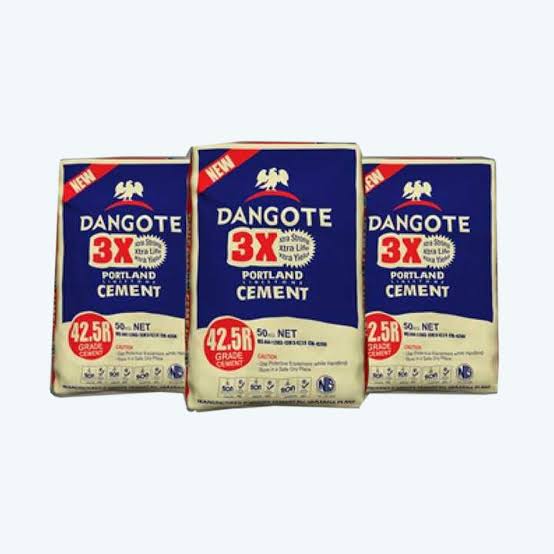

If you’re costing a 3-bedroom bungalow before you break ground, the number to hold in your head is this: a standard bungalow on normal soil swallows roughly 400–650 bags of cement from foundation to final plaster. At ₦9,000–₦12,000 a bag (August 2026), that’s about ₦3.6M–₦7.8M (~$2,600–$5,600) spent on cement alone. A typical mid-range build lands near 500 bags (~₦5.0M / ~$3,600). Foundation type is the biggest swing factor — a raft slab can add 150–250 bags over a simple strip footing. (Figures at ₦1,400/$, August 2026.)
Cement is the one material you cannot afford to guess on. Order too little and work stops mid-pour while you chase supply at a worse price. Order too much and bags harden in the rain before you use them. So let’s put a real number on it — stage by stage, with today’s prices, and the honest caveats most cost lists skip.
How many bags of cement does a 3-bedroom bungalow really need?
For a standard 3-bedroom bungalow (around 130–170 sqm of floor area) built with 9-inch hollow blocks on a strip foundation, plan for 400–650 bags total. The spread is wide because your foundation, soil, wall height and finish quality each move the figure. Here’s where the cement actually goes.
| Building stage | Cement (bags) | Cost at ₦10,000/bag | ~ USD |
|---|---|---|---|
| Foundation (strip footing) | 80–140 | ₦800,000–₦1,400,000 | ~$570–$1,000 |
| Block moulding (~2,800 blocks) | 60–100 | ₦600,000–₦1,000,000 | ~$430–$710 |
| Block laying (mortar) | 40–70 | ₦400,000–₦700,000 | ~$290–$500 |
| Columns, beams, lintels | 50–90 | ₦500,000–₦900,000 | ~$360–$640 |
| Ground floor screed | 35–55 | ₦350,000–₦550,000 | ~$250–$390 |
| Internal & external plaster | 100–160 | ₦1,000,000–₦1,600,000 | ~$710–$1,140 |
| Tile bedding & grouting | 20–35 | ₦200,000–₦350,000 | ~$140–$250 |
| Total (strip foundation) | 400–650 | ₦4.0M–₦6.5M | ~$2,900–$4,600 |
Notice how plastering quietly becomes the second-biggest cement consumer after the foundation — 100–160 bags. People remember the foundation and forget the render, then wonder why the last skip of cement disappeared so fast.
Worth knowing: These are quantities for the structure only. They do not include the fence, gatehouse, septic tank, soakaway or external paving — each of those adds its own cement. A perimeter fence alone can add 60–120 bags depending on length and height.
How foundation type changes the number
The single biggest variable is what you sit the house on. On firm, dry ground a strip foundation is enough and keeps you at the low end. On soft, waterlogged or filled land — common around Lekki, Ajah, parts of Port Harcourt and reclaimed swampy plots — an engineer may specify a reinforced raft slab that spreads the load across the whole footprint.
| Foundation type | Cement for foundation (bags) | Typical total build (bags) |
|---|---|---|
| Strip footing (firm soil) | 80–140 | 400–550 |
| Raft slab (soft/wet soil) | 200–380 | 550–750 |
That’s a potential 150–250 extra bags — ₦1.5M–₦2.5M (~$1,070–$1,790) — decided entirely by your soil. This is exactly why you get a soil test before you buy cement, not after.
What does the cement itself cost in 2026?
Cement prices climbed hard through 2024–2025 and have settled into a still-high band in 2026. As of August 2026, expect roughly ₦8,000–₦12,000 per 50kg bag depending on brand and location, per dealer surveys reported by Legit.ng and building-cost trackers.
| Brand | Price per 50kg bag (Aug 2026) | ~ USD |
|---|---|---|
| Dangote | ₦8,500–₦12,000 | ~$6.1–$8.6 |
| BUA (Elephant) | ₦8,000–₦11,000 | ~$5.7–$7.9 |
| Lafarge (WAPCO) | ₦8,500–₦12,000 | ~$6.1–$8.6 |
Prices run lowest near the plants (Obajana, Ibese, Sokoto) and highest where transport is long — Port Harcourt and the far South-East typically pay the most. Buying 20+ bags at once usually shaves 5–10%. For where prices might head next, see our take on whether Dangote’s $800M cement expansion will actually cut building costs.
What most cement estimates leave out
Here’s the part contractors rarely spell out for a first-time builder:
Waste is real. Between spillage, over-rich mixes on site and a bit of pilfering, budget 5–10% more cement than the theoretical figure. A build that calculates to 480 bags should be planned around 500–530.
Mix ratio discipline saves money. Over-cementing does not make concrete stronger past its design ratio — it just burns bags. A gang that mixes “by eye” and errs generous can quietly cost you 30–50 extra bags across a build. Insist on gauge boxes.
Hollow blocks beat solid blocks on cement. Properly reinforced hollow sandcrete blocks use 35–40% less cement than solid blocks for the same wall — a big saving over 2,800 blocks.
Storage costs you if you buy too early. Cement has a shelf life of weeks, not months, and Nigerian humidity is unforgiving. Buy per stage, not all at once, unless you have dry, sealed storage.
Costing a full build, not just the cement? Our Feasibility Studio turns your plot size, location and finish level into a stage-by-stage material and money plan — so you know the whole number before you commit.
How other building types compare
If your project isn’t a standard 3-bedroom bungalow, use these as planning anchors (structure only, strip foundation, 2026):
| Building type | Cement (bags) | Approx. cement cost (₦) | ~ USD |
|---|---|---|---|
| 2-bedroom flat (ground floor) | 280–420 | ₦2.8M–₦4.2M | ~$2,000–$3,000 |
| 3-bedroom bungalow (standard) | 400–650 | ₦4.0M–₦6.5M | ~$2,900–$4,600 |
| 4-bedroom bungalow | 520–800 | ₦5.2M–₦8.0M | ~$3,700–$5,700 |
| 4-bedroom duplex (2 floors) | 750–1,200 | ₦7.5M–₦12.0M | ~$5,400–$8,600 |
For the full money picture — labour, iron, sand, granite, roofing and finishes on top of cement — see our guides on the cost of building a modern 3-bedroom flat, how much sand and granite you need, and the cost of plastering a house.
Frequently asked questions
How many bags of cement for the foundation of a 3-bedroom bungalow?
A strip foundation typically needs 80–140 bags; a reinforced raft slab on soft soil needs 200–380 bags. At ₦10,000/bag that’s ₦0.8M–₦3.8M (~$570–$2,700) just for the foundation stage.
How many blocks does a 3-bedroom bungalow need?
Around 2,800–3,800 nine-inch hollow blocks, depending on wall length and internal partitions. Moulding those blocks yourself uses roughly 60–100 bags of cement; buying them ready-made shifts that cost into the block price instead.
Is it cheaper to buy cement in bulk?
Yes — ordering 20+ bags at once usually saves 5–10%, and buying near a plant saves more. But only bulk-buy what you’ll use within a few weeks; damp storage ruins cement fast in Nigeria’s climate.
Why do cement estimates vary so much?
Foundation type, soil condition, wall height, whether you use hollow or solid blocks, and site waste all move the number. That’s why a proper bill of quantities for your specific design beats any generic figure.
Watch out: A contractor who quotes an exact cement figure to the single bag before seeing your drawings and soil test is guessing. Ranges are honest; false precision is a red flag.
How we sourced these figures. Quantities are drawn from standard Nigerian bills of quantities for a 3-bedroom bungalow (foundation-to-finish) cross-checked against published estimates from Nigeria Building Cost. Cement prices reflect August 2026 dealer surveys. Currency conversions use ₦1,400/$ (official rate ~₦1,350, parallel ~₦1,430, August 2026). Last updated: August 2026. Next review: November 2026. Journalists and researchers may cite this with attribution to LandsofNigeria.com.
Before you order a single bag, cost the whole build. The Feasibility Studio will give you a location-specific material and budget plan for your bungalow — no more guessing at the block store.


