
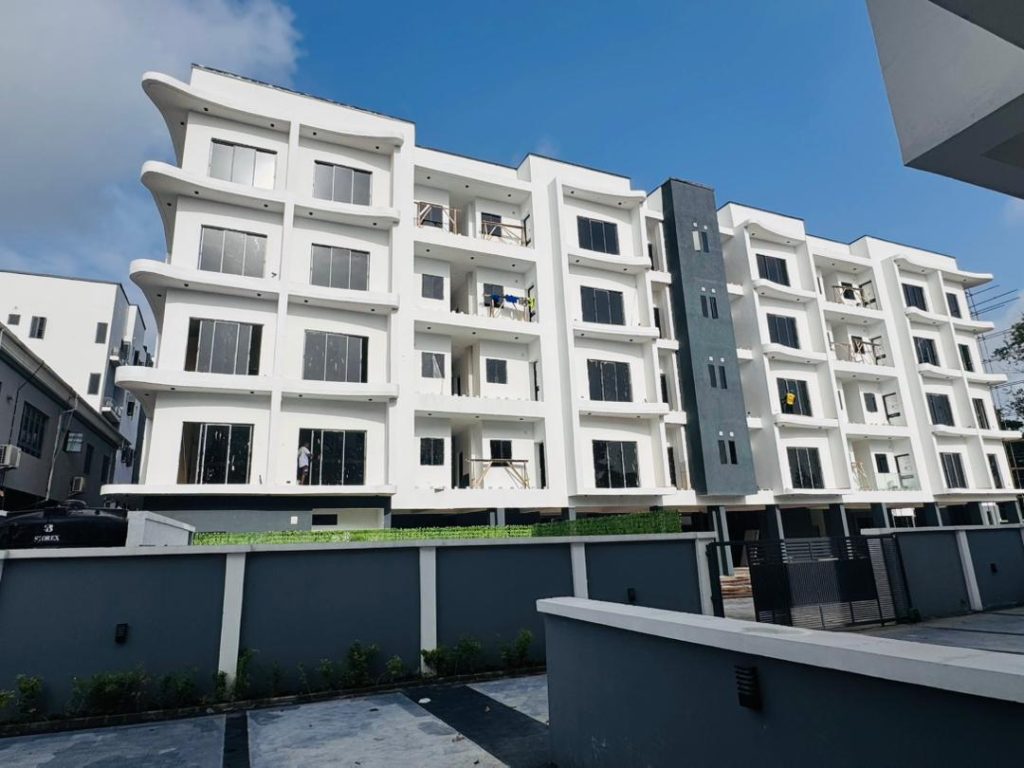

The Lagos shortlet gold rush is cooling. Market growth has slowed to about ₦285.5bn (~$197M) as a flood of new apartments pushes average occupancy down to roughly 35–43% — meaning many units now sit empty more nights than they’re booked. Add a February 2026 shortlet ban on Banana Island and new tax rules from January 2026, and the easy money is gone. This isn’t a reason to panic or to write off shortlets — it’s a reason to buy on real occupancy math, in the right location, not on a glossy nightly-rate screenshot. (Figures at ₦1,450/$, September 2026.)
By Folagbade Daniel · Lands of Nigeria — 6+ years reading the Lagos market.
For two years, “buy a flat, put it on Airbnb, print money” was the loudest advice in Lagos property WhatsApp groups. The latest numbers (late August 2026) tell a more sober story. Supply has caught up with demand, occupancy has softened, and the regulators have started drawing lines. If you were about to buy a Lekki one-bedroom purely to run as a shortlet, read this first.
What actually changed
Three things shifted at once, and together they reset the maths:
| Shift | The number | What it means for you |
|---|---|---|
| Supply surge | ~8,700 active Lagos short-let listings | Far more competition for the same guests |
| Occupancy softening | ~35–43% average (many nights empty) | Revenue models built on 70% occupancy are fantasy |
| Average performance | ~$96/night, ~$4,500/yr per listing average | Gross, before furnishing, power, management and tax |
| Regulation | Banana Island shortlet ban (Feb 2026); Nigeria Tax Act rules from Jan 2026 | Location and compliance now make or break returns |
That ~$4,500 (~₦6.5M) average annual revenue is before you subtract furnishing, diesel and inverter costs, cleaning, platform fees, management and tax. Net it all out and a poorly located, poorly managed unit can underperform a boring long-term let — the exact opposite of the pitch.
The calm buyer’s move
Look — a cooling market isn’t a closed market. It’s a market that has stopped rewarding laziness. If you still want shortlet income, here’s the honest play:
- Underwrite at 40% occupancy, not 70%. If the deal only works at fantasy occupancy, it doesn’t work. Run it at today’s real numbers and see if you’d still buy.
- Location does the heavy lifting. Business-district proximity, airport access and genuine tourist pull keep units booked; a flat in the wrong corner competes on price and loses.
- Check the estate’s own rules. After Banana Island, more estates and associations are restricting or banning shortlets. Confirm it’s allowed before you buy, in writing.
- Compare it honestly to a long let. Sometimes a steady annual tenant beats the shortlet grind once you count vacancy and management. Do the side-by-side.
- Buy the asset, not the hype. A well-located, clean-title Lagos flat has value whether or not you run it as a shortlet. Buy something that still makes sense as a normal home.
Thinking of buying a flat to let short or long? Run the two scenarios side by side before you commit. Our Feasibility Studio models occupancy, costs and net yield on real Lagos data — so you buy on numbers, not vibes.
What most hot takes leave out
The panic headlines say “the shortlet bubble is bursting.” That’s lazy. What’s actually happening is a normal market maturing: the average is falling because weak, me-too units are dragging it down, while well-located, well-run apartments in the right areas still book fine. Averages hide winners. The other thing the takes skip: a shortlet is a small hospitality business, not passive income. It needs management, restocking, guest handling and compliance. If you can’t run it like a business — or pay someone who can — a long-term let is the saner buy. And if you’re buying from abroad, be doubly careful: an empty shortlet you can’t see is a fast way to bleed money on service charge and diesel.
Worth knowing: whether you let short or long, the tenant maths in Lagos is under pressure because rents have far outrun wages. Affordability now caps how much you can charge — a real constraint on both models. The proposed Lagos Tenancy Bill may reshape long-let rules too.
Frequently asked questions
Is it still worth buying a Lagos property for shortlet in 2026?
It can be — but only in the right location, run properly, and underwritten at today’s ~35–43% occupancy rather than the old 70% assumption. Marginal locations and hands-off owners are the ones getting squeezed.
Why has Lagos shortlet occupancy dropped?
Supply grew far faster than demand — around 8,700 active listings now compete for guests — so average occupancy has slipped and weak units sit empty. Regulation and tax changes added further pressure in 2026.
Should I buy for shortlet or a long-term let?
Run both scenarios. A long let trades lower headline income for stability and less work; a shortlet can earn more only if location and management are strong. In a cooling market, the safer default is the model that still profits at conservative occupancy. Compare with our rental yields guide.
Are shortlets being banned in Lagos?
Not city-wide, but Banana Island banned them in February 2026 over security concerns, and more estates are adding restrictions. Always confirm an estate’s rules in writing before buying to run a shortlet there.
Buying a Lagos flat from abroad? Verify the title and the estate’s shortlet rules before you send money. Our free checklist covers exactly what to confirm.
Sources & date: market figures from BusinessDay and Nigeria Housing Market (late August 2026), with occupancy and rate benchmarks from short-term-rental data trackers. Figures are market averages; individual units vary widely. Dollar figures at ₦1,450/$ (naira near ₦1,335 official, ~₦1,410 parallel, early September 2026). Last updated: September 2026. Journalists and researchers may cite this with attribution to LandsofNigeria.com.
Related guides: Renting vs Buying in Lagos (2026) · Are Lagos Homes Overpriced in 2026? · Where to Buy in Lagos by Budget
