
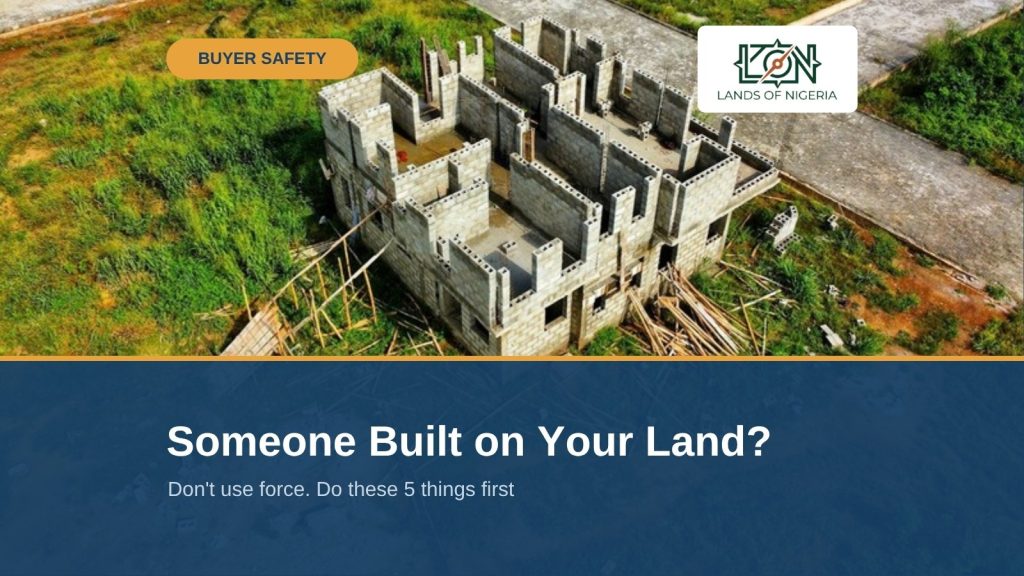

If you find a stranger’s foundation, fence or house on your plot, do not send boys to pull it down. Gather your title papers, photograph the site, and in Lagos petition the Special Task Force on Land Grabbers under the 2016 Properties Protection Law, where an encroacher who refuses to leave faces a fine of up to ₦5,000,000 (~$3,600), up to five years in prison, or both. Move fast: in Lagos, a court case to recover land generally has to start within 12 years. (Figures at ₦1,385/$, October 2026.)
This is the call nobody wants. A cousin rings from home, or you visit after three years in London or Houston, and someone is living on the land you paid for. Here’s the thing: what you do in the first week decides whether this ends at a task-force meeting or drags through court for years. This guide walks through the steps in order, explains what the Lagos law actually says, and is honest about where the law outside Lagos is less clear.
What should you do first if someone has built on your land?
Stop, document and don’t fight. Before you call anyone, build your evidence: the title documents, the survey plan, receipts, and dated photos and video of what is on the land now. Then find out who is there and on whose authority, because the answer decides your next move.
- Collect your papers. Certificate of Occupancy or Governor’s Consent, Deed of Assignment, registered survey plan, purchase receipts and any family receipt. Our guide to Nigerian property documents explains which ones carry weight.
- Record the site. Dated photos and video of the structure, beacons and boundaries. If you are abroad, have someone you trust do this, ideally with a surveyor present.
- Confirm the boundary. A licensed surveyor can check whether the building is actually on your plot or on a neighbour’s. Plenty of “encroachments” turn out to be beacon errors.
- Find out who sold it to them. The occupier often bought in good faith from a family member, an omo onile (a land tout claiming family rights) or a fraudster. That person is the real target of any criminal complaint.
- Get a lawyer before you confront anyone. Only a lawyer should write demand letters, prepare petitions or file in court.
Watch out: Lagos’s own task force tells victims they “should never resort to self-help.” The 2016 law makes using force to take over land a crime that can carry 10 years in prison, and that applies to you too if you hire thugs to evict the occupier.
What does the Lagos Properties Protection Law say?
The Lagos State Properties Protection Law 2016 turned land grabbing from a civil dispute into a crime. It covers forceful entry, refusing to leave, selling land you don’t own, and demanding “development levies” before people can build. These are the main penalties, as summarised by two legal publishers when the law was passed.
| Offence | Maximum penalty | ~ USD |
|---|---|---|
| Taking over land by force, or using threats or violence to enter | 10 years in prison | n/a |
| Encroacher who refuses to leave when the owner requires it | ₦5,000,000 fine or 5 years, or both | ~$3,600 |
| Offering land for sale without title or the owner’s authority | ₦500,000 fine or 6 months, or both | ~$361 |
| Actually selling land without title or authority | Fine up to 100% of the land’s value or 5 years, or both; land reverts to the owner | n/a |
| Selling family or government land without the required consent | 21 years in prison | n/a |
| Demanding fees or obstructing construction | ₦1,000,000 fine or 2 years, or both | ~$722 |
Sources: LawPavilion (28 September 2016) and Legalnaija (15 August 2016) summaries of the Law. Check the current text with your lawyer, since commentary is not the statute.
The law also bars police, vigilantes and ethnic or traditional groups from enforcing court judgments on land themselves. A judgment has to be executed through the court’s own process.
One nuance: the ban on demanding construction levies does not stop a land-owning family, acting with the family head’s authority, from asking a buyer for a customary “foundation” fee, or a ratification fee backed by a court judgment. Anyone else demanding money to let you build is committing an offence.
How do you report a land grabber in Lagos?
You petition the Lagos State Special Task Force on Land Grabbers, which sits under the Ministry of Justice. According to the Ministry’s task force page (updated 10 September 2026), the petition should:
- be addressed to the Attorney-General and Commissioner for Justice, for the attention of the Coordinator of the Task Force;
- set out the facts and attach photocopies of your title documents;
- include a sworn affidavit with your passport photograph;
- give the names, addresses and phone numbers of the people you say have encroached.
The task force then invites both sides, holds fact-finding meetings, offers mediation and can inspect the site. The law gives it powers of arrest, and offences are tried in the Special Offences Court and other courts. The page does not list any fee for filing. Be careful with the affidavit: petitions must be sworn, and the law also covers petitions the writer knows are false.
Worth knowing: The Ministry’s page publishes two different sets of undated figures for petitions received and resolved, so we can’t tell you how long cases take. Treat the task force as a strong first step, not a quick fix.
How long do you have before you lose the right to recover your land?
In Lagos, generally 12 years. Section 16(2)(a) of the Limitation Law of Lagos State says an action to recover land cannot be brought after twelve years, as Ebun-Olu Adegboruwa, SAN, explained in a 2021 review of a Supreme Court decision. There are exceptions, for example around customary-law transactions, and when the clock starts depends on the facts. So the honest advice is simple: do not let years pass because you are abroad. Ask your lawyer when your clock started.
What if you live abroad?
You can do almost all of this without flying home, but you need two people on the ground: a lawyer, and someone you trust to visit the site. Give your lawyer authority through a properly prepared power of attorney (see our brief for your Nigerian lawyer). The affidavit for the task-force petition must be sworn, so ask your lawyer how to do that where you live.
And when you send money for any of this, pay the lawyer’s firm account, never a relative’s personal account “to sort the police.”
Most encroachments start with a weak purchase. Our free Land Verification Checklist covers the title, survey and family-consent checks that make your claim hard to challenge.
What if your land is outside Lagos?
The steps are the same: document, verify the boundary, don’t use force, get a lawyer. What changes is the law.
- Ogun State (Mowe, Ibafo, Sagamu, Abeokuta and the Lagos fringe) has its own law: the Prohibition of Forcible Occupation of Landed Properties Law 2016, which Governor Amosun signed in November 2016. Reports at the time described jail terms of up to 25 years for forcefully taking over land. Ask an Ogun lawyer how complaints are handled today, because we could not confirm how its enforcement team currently works.
- Other states: we could not confirm a law with the same powers, so your options are usually a police complaint where there is a crime such as fraud or violence, and a civil suit in the state High Court for trespass, recovery of possession and an injunction to stop further building.
Limitation periods vary by state, so check yours with a local lawyer.
How do you stop it happening again?
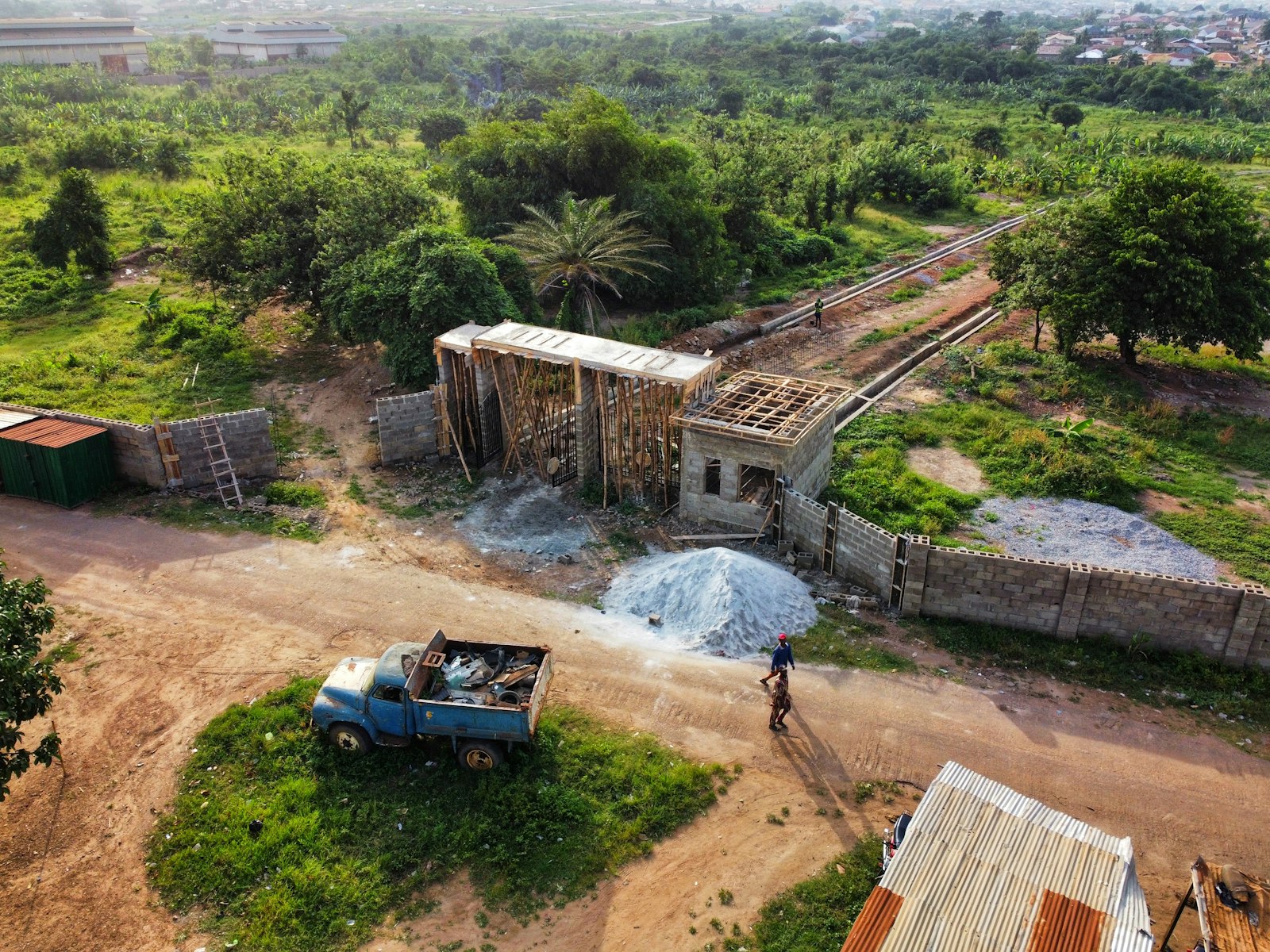
Encroachers go for land that looks abandoned. A fence, visible beacons, a signboard with your lawyer’s name, and regular visits do more than any lawsuit. Our guide to what it costs to fence a plot helps you budget, and how omo onile operate explains the most common way land gets resold.
Frequently asked questions
Can I demolish a building someone put on my land?
Not by yourself. In Lagos, using force or self-help to take back land is a crime under the 2016 law, with up to 10 years in prison. Petition the task force or get a court order, then let the court’s officers enforce it.
Can the police evict someone from my land?
The Lagos law bars police and vigilante groups from executing judgments on land themselves; enforcement goes through the court’s own process. The police can act on crimes such as fraud or violence.
What is the penalty for refusing to leave someone’s land in Lagos?
Up to ₦5,000,000 (~$3,600), up to five years in prison, or both, under the Properties Protection Law 2016.
Does it cost money to petition the Lagos land grabbers task force?
The Ministry of Justice’s page lists no filing fee. You will still pay your lawyer and for the sworn affidavit.
Will I lose my land if I wait too long?
You can. In Lagos, an action to recover land generally has to start within 12 years under the Limitation Law, with some exceptions. Act as soon as you find out.
Planning to build once the land is safe? Feasibility Studio will help small builders test a project before spending. It launches soon.
Sources and methodology
- Lagos State Ministry of Justice, Lagos State Special Task Force on Land Grabbers, page updated 10 September 2026, opened 8 October 2026.
- LawPavilion, “Lagos State Property Protection Law, 2016”, 28 September 2016.
- Legalnaija, “Provisions of the Lagos State Properties Protection Law 2016”, 15 August 2016.
- Ebun-Olu Adegboruwa, SAN, “Redefining the Law of Limitation in Land Cases”, TheNigeriaLawyer, 6 April 2021.
- Penalties come from two legal summaries that agree with each other, not from the gazetted text. This guide is general information, not legal advice.
- Ogun State law: Channels TV, 14 November 2016.
- Dollar figures at ₦1,385/$, the parallel-market rate in late September 2026.
Last updated: 8 October 2026. Journalists and researchers may cite this with attribution to LandsofNigeria.com.
