
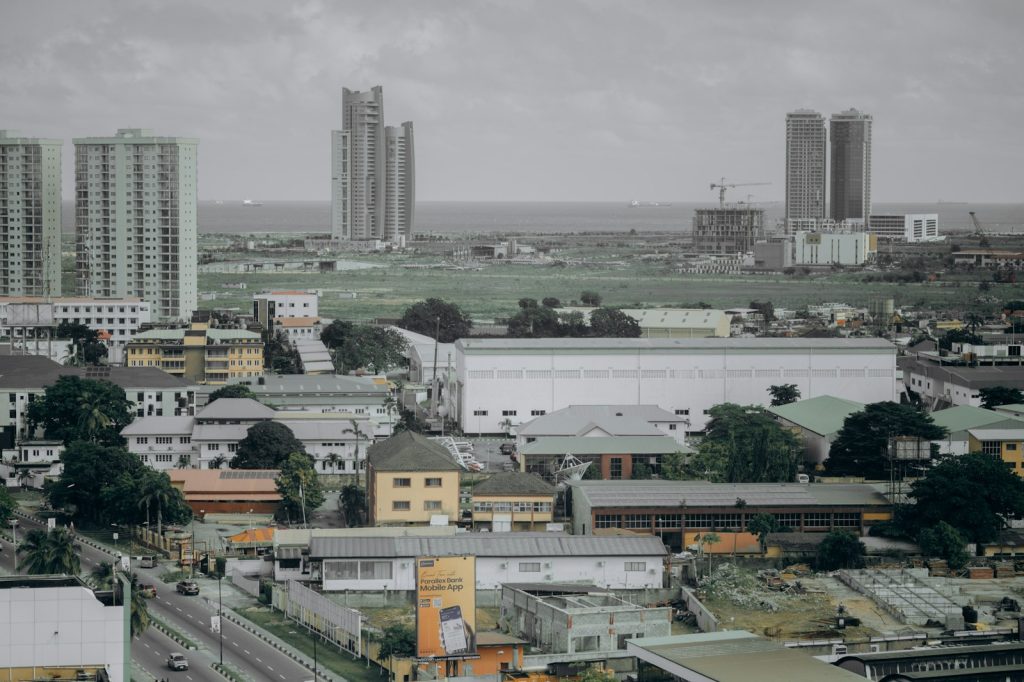

In mid-August 2026, economist Bismarck Rewane of Financial Derivatives Company warned that Nigeria’s property market could face a correction, pointing to oversupply in Lagos, Abuja and Port Harcourt plus rising mortgage defaults. Before you panic: a correction is not a crash, and it won’t hit every area the same way. Construction costs have roughly doubled in two years, so genuine building prices aren’t collapsing. The real opportunity is simple — negotiate harder, and buy where demand is real. (Figures at ₦1,450/$, August 2026.)
The headlines this week sound scary if you’re about to buy or you already own. “Correction.” “Oversupply.” “Delinquency.” Let’s cut through it and translate what was actually said into what it means for your money.
What was actually said
Speaking at a Financial Derivatives Company and Lagos Business School session in August 2026, Bismarck Rewane said the real estate market could correct because of overbuilding in some major cities. He named Lagos, Abuja and Port Harcourt as places where excess inventory is building up, and pointed to rising rents, weak affordability, mortgage defaults and growing delinquency as downward pressures on prices. Estate surveyor Dimeji Aluko added that surging building costs are making developers’ project maths harder — which can delay supply or push costs onto buyers.
Crucially, the analysts were clear that a correction “would not necessarily affect every part” of the market equally. High-priced, oversupplied areas are the exposed ones. Areas with genuine population growth and limited supply can keep rising.
Why prices went up in the first place — and why that matters
Here’s the piece that changes how you should read a “correction.” A lot of the price growth wasn’t demand — it was cost. Look at what’s happened to materials, reported by BusinessDay and market trackers:
| Material | ~ Late 2024 | ~ August 2026 | ~ USD now |
|---|---|---|---|
| Cement (bag) | ₦7,500 | ₦12,000–₦15,000 | ~$8.30–$10.30 |
| Block (each) | ₦600 | ₦1,100 | ~$0.76 |
| Sand (30 tonnes) | ₦165,000 | ₦250,000 | ~$172 |
| Granite | ₦530,000 | ₦780,000 | ~$538 |
| Reinforcement steel (tonne) | ₦850,000 | ₦1,150,000 | ~$793 |
Reported material prices, late 2024 vs August 2026, at ₦1,450/$. Source: Nigeria Housing Market / BusinessDay, August 2026.
When the cost of building nearly doubles, asking prices rise even if nobody’s richer. That’s why the analysts stress the difference between “higher prices” and “higher value.” A market propped up by construction inflation can wobble on affordability — but it also can’t fall below what it costs to build. That floor is your safety net as a buyer.
What this actually means for you
If you’re buying to live in: this is quietly good news. Negotiating room is opening up. In Abuja, homes are already reportedly closing at 88–95% of asking — 5–12% off is normal. In oversupplied prime areas, push harder. Don’t rush; days-on-market of 120–180 days means sellers need you more than you need any one flat.
If you’re buying off-plan: be pickiest here. An oversupplied luxury zone is exactly where a stalled or discounted project can hurt. Check the developer’s track record and financing, demand escrow-style payment terms, and avoid buying into a glut on a brochure promise.
If you’re an investor: stop chasing headline price growth and look at fundamentals — rental yield, vacancy, real demand, and replacement cost. Areas with jobs, migration and limited supply hold up; speculative prime stock in oversupplied corridors is where a correction bites.
Worth knowing: “Correction” in a market this segmented rarely means uniform price drops. It usually means the most overpriced, oversupplied pockets soften while genuinely scarce, well-located property keeps its value. Your defence isn’t fear — it’s location fundamentals and a hard-nosed offer.
Trying to tell real value from an inflated asking price? The LON Feasibility Studio will let you sanity-check a deal against build cost and rental yield in naira and dollars — so you’re negotiating from numbers, not vibes.
Frequently asked questions
Is the Nigerian property market going to crash in 2026?
No credible analyst is forecasting a nationwide crash. The warning is about a possible correction in specific oversupplied cities — Lagos, Abuja, Port Harcourt — not a uniform collapse. Well-located, scarce property is expected to hold.
Should I wait to buy?
If you’re buying a home to live in and you find the right property at a negotiated price, waiting for a “perfect bottom” rarely pays — and construction costs keep rising underneath prices. If you’re speculating in an oversupplied prime area, patience and hard negotiation make sense.
Which areas are most at risk?
High-priced, oversupplied segments in Lagos, Abuja and Port Harcourt — think luxury blocks where lots of similar units are chasing few buyers. Areas with strong migration, jobs and limited supply are more resilient.
Why are prices high if demand is weak?
Largely because building costs nearly doubled in two years. Much of the price rise reflects cost-push inflation, not booming demand — which is exactly why affordability, not scarcity, is the pressure point.
Methodology & sources
Based on remarks reported from a Financial Derivatives Company / Lagos Business School session, August 2026, and material-price data via BusinessDay, as compiled by Nigeria Housing Market (17 August 2026). Currency at ₦1,450/$ (official NFEM ~₦1,350; parallel ~₦1,420, mid-August 2026). Last updated: 20 August 2026. Journalists and researchers may cite this with attribution to LandsofNigeria.com.
Related reading: Are Lagos homes overpriced in 2026? · Is Nigerian land a good investment in 2026? · Estate developer red flags for off-plan buyers · Renting vs buying in Lagos: the real math · Nigeria’s real estate hits $2 trillion: what it means

