
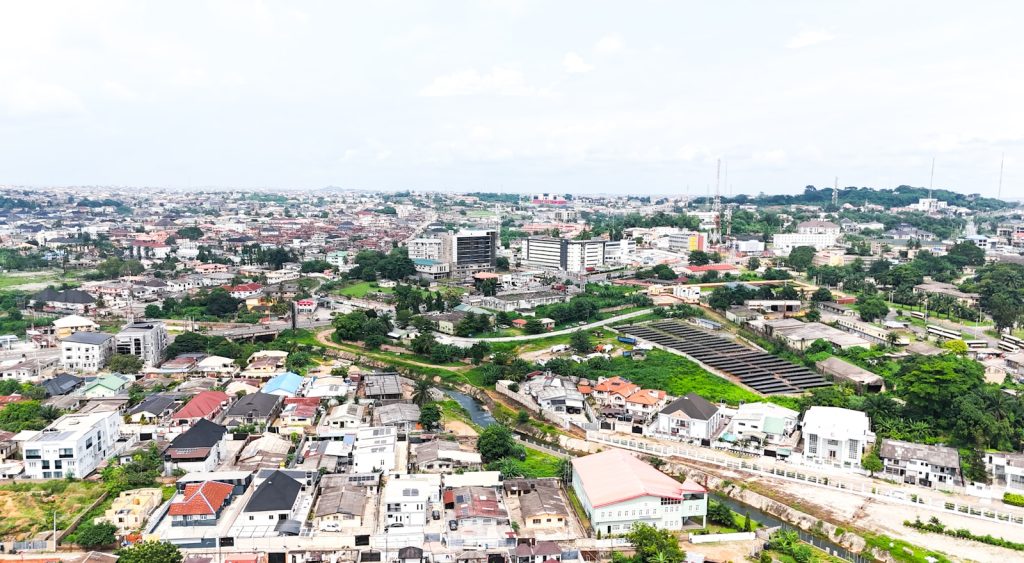

Nigeria’s five strongest property investment hotspots in 2026 are Ibeju-Lekki (land appreciating ~18–35% a year off the Dangote Refinery and Deep Sea Port), Lekki (premium rentals, ~18–25% corridor growth), Abuja (steady 8–10% a year, higher in Katampe Extension and Jabi), Port Harcourt (12–18% in premium estates, corporate-housing demand) and Enugu (the affordable long-game, entry from ~₦27M/~$19,100). National rental yields sit around 6–10%. Match the city to your goal — growth, yield or affordability — not the hype. (Figures at ₦1,410/$, September 2026.)
Here’s the honest version of this post — rebuilt for 2026 with real prices, not vibes. The old edition promised land that “doubles overnight.” That’s not how this works, and it’s the kind of talk that gets people scammed. What follows is where the money is actually flowing this year, what it costs to get in, and — just as important — who each place is right for.
| Hotspot | 2026 appreciation (indicative) | Entry price guide | Best for |
|---|---|---|---|
| Ibeju-Lekki, Lagos | ~18–35% / yr | Registered plot ₦6M–₦15M (~$4,300–$10,600) | Land banking, growth |
| Lekki, Lagos | ~18–25% / yr (corridor) | Premium; short-let yields highest | Rental income, luxury |
| Abuja | ~8–10% / yr (15–20% in Katampe Ext, Jabi) | Mid-tier plots vary by district | Stability, rentals |
| Port Harcourt | ~12–18% / yr (premium estates) | Corporate-grade homes | Corporate rentals |
| Enugu | Steady, long-term | From ~₦27M (~$19,100), Independence Layout | Affordable entry, hold |
1. Ibeju-Lekki, Lagos — the growth engine
Still the headline story, and for good reason. The Dangote Refinery is running, the Lekki Deep Sea Port is live, and the Lagos–Calabar Coastal Highway is pushing land values along the shoreline. Land in the Ibeju-Lekki/Epe axis is appreciating roughly 18–35% a year, and Epe plots once under ₦2M (~$1,400) are now climbing 20–25% annually.
The catch: this is the highest-scam-risk axis in Lagos. Cheap “excision in process” plots are where people lose money. Buy registered land only, and read our full guide to buying land in Ibeju-Lekki safely before you commit. Best for: land banking and medium-term growth.
2. Lekki, Lagos — the income play
Lekki (Phase 1 especially) remains Lagos’s premium rental and business hub, with short-let and corporate demand keeping yields healthy. The wider Lekki corridor is projected to grow around 18–25%. Prime land is expensive — Victoria Island next door averages about ₦3.05M/sqm (~$2,160/sqm) per Estate Intel — so Lekki is an income and prestige play, not a bargain entry. Best for: rental income (especially short-lets) and luxury holds.
3. Abuja — the stability pick
The capital offers what Lagos often can’t: predictability. Prime districts appreciate a steady 8–10% a year, while maturing areas like Katampe Extension and Jabi are projected at 15–20%. The best rental yields tend to sit in intermediate neighbourhoods — Gwarinpa, Lugbe, Kubwa. Diplomatic and government demand underpins the market. Best for: steady appreciation and reliable rentals. See our Abuja neighbourhood guide.
4. Port Harcourt, Rivers State — the corporate market
Port Harcourt runs on oil-and-gas economics few cities can match, driving demand for corporate housing in areas like GRA Phase 2 and Trans Amadi, where premium estates are seeing roughly 12–18% growth. Add the wider South-South momentum — a ~$1 billion port upgrade around Onne is fuelling an industrial land rush — and there’s a real corporate-rental thesis here. Best for: corporate serviced rentals.
5. Enugu — the affordable long game
The Coal City is the patient investor’s pick. Land is far cheaper than Lagos or Abuja: a developing plot in Independence Layout Phase Two can go for around ₦27M (~$19,100), while prime 1,200sqm plots at Republic Estate reach ₦78M (~$55,300). With lower entry costs and improving infrastructure, Enugu rewards a buy-and-hold approach rather than quick flips. Best for: affordable entry and long-term appreciation.
Weighing a plot or a build in one of these markets? Our Feasibility Studio — land cost, build cost, appreciation and yield in one clear model — launches soon. Join the founding list for early access.
What most “hotspot” lists get wrong
Three things. First, they quote appreciation like it’s guaranteed — it isn’t; a chunk of the naira “growth” is currency inflation, so judge gains against the dollar too. Second, they ignore title risk, which is where the highest-growth areas (hello, Ibeju-Lekki) quietly eat people alive. A 30% gain on land you can’t register is a 100% loss. Third, they treat “hotspot” as one thing, when growth, yield and affordability are different goals that point to different cities.
The smart move isn’t chasing the highest number. It’s matching the city to your actual objective — and verifying every title before you pay.
Frequently asked questions
Which Nigerian city has the highest returns in 2026?
For raw land appreciation, Ibeju-Lekki leads at roughly 18–35% a year. For rental yield, Lekki short-lets and Port Harcourt corporate housing are strong. National rental yields average about 6–10%.
Where can I invest on a smaller budget?
Enugu and the Ibeju-Lekki/Epe fringe offer the lowest entry points — from around ₦6M (~$4,300) for a registered plot on the Lagos fringe, or ~₦27M (~$19,100) for a developing Enugu plot. Just never trade a low price for a bad title.
Is now a good time to buy?
For growth corridors backed by real infrastructure, yes — but the right plot beats the fast plot. Verify title first; the “buy before it rises” line is a sales tactic. Compare with our best cities to buy property in Nigeria guide.
How do I avoid losing money in these hotspots?
Chart the survey and run a title search before paying — see our step-by-step land verification guide. In high-growth areas, verification matters more, not less.
The bottom line
Nigeria’s 2026 hotspots are real, but they reward strategy over hype. Pick the city that fits your goal — Ibeju-Lekki for growth, Lekki for income, Abuja for stability, Port Harcourt for corporate rentals, Enugu for affordable holds — and verify every title before your money moves.
Before you buy in any hotspot, protect yourself. Our free Land Verification Checklist walks you through title, survey and charting — the exact checks that separate a smart investment from a costly mistake.
Methodology & sources: Appreciation ranges and prices reflect 2026 market observation and active listings across Lagos, Abuja, Port Harcourt and Enugu, converted at ₦1,410/$. Figures are indicative ranges, not guaranteed returns; property values move with location, title and the economy. Verify current prices and titles before transacting.
Last updated: September 2026 (rebuilt from the 2025 edition). Next review: March 2027.
Written by Folagbade Daniel · Lands of Nigeria — 6+ years covering the Nigerian land market. Journalists and researchers may cite this with attribution to LandsofNigeria.com.

