
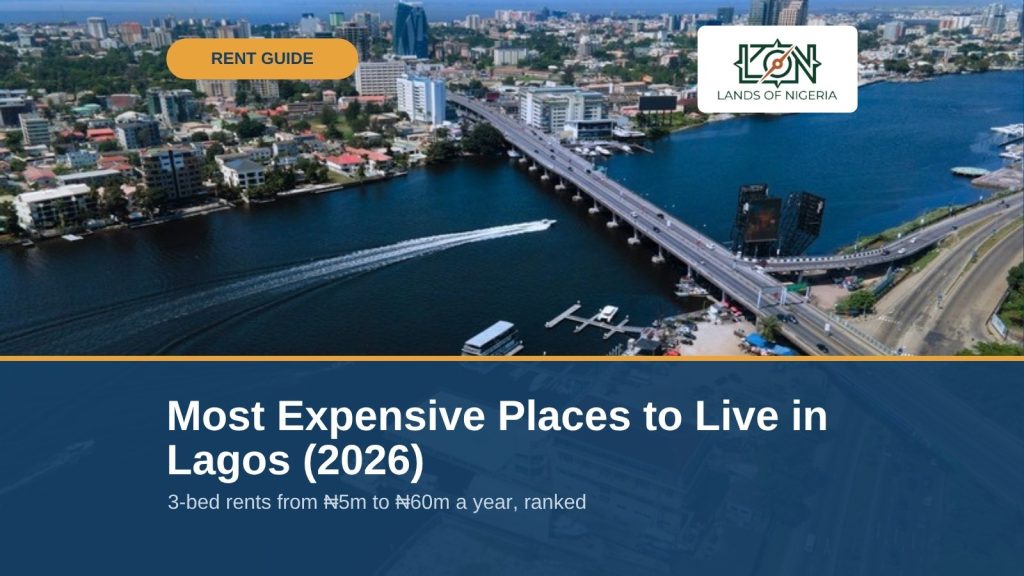

The most expensive place to rent in Lagos is still Banana Island, where current listings put a 3-bedroom flat at roughly ₦35m–₦60m a year (~$22,580–$38,710). Ikoyi follows at ₦26m–₦40m. The surprise in September 2026 is Ikeja GRA: a wave of new serviced blocks has pushed most of its 3-bed listings to ₦25m–₦35m, level with or above Victoria Island. Whatever the area, the advertised rent is only part of the bill. Expect a service charge (often ₦1.5m–₦4.5m on the Island) and a move-in package of agency, legal and caution fees that adds roughly 25–30% on top. (Figures at ₦1,550/$.)
We rebuilt this ranking in September 2026 from current listings on Nigeria Property Centre and PropertyPro, replacing the older mix of sources. The biggest change is on the Mainland. Ikeja GRA has moved up the table, because landlords are building luxury serviced flats there and pricing them like the Island.
The 10 most expensive places to live in Lagos, ranked
Ranked by the typical asking rent for a 3-bedroom flat. That is the cleanest like-for-like measure across areas, since sale prices vary widely with building age and finish.
| # | Area | Typical 3-bed asking rent /yr (₦) | ~ USD |
|---|---|---|---|
| 1 | Banana Island (Ikoyi) | ₦35m–₦60m | ~$22,580–$38,710 |
| 2 | Ikoyi (incl. Old Ikoyi) | ₦26m–₦40m | ~$16,770–$25,810 |
| 3 | Ikeja GRA | ₦25m–₦35m | ~$16,130–$22,580 |
| 4 | Victoria Island | ₦18m–₦35m | ~$11,610–$22,580 |
| 5 | Oniru (VI extension) | ₦15m–₦25m | ~$9,680–$16,130 |
| 6 | Lekki Phase 1 | ₦10m–₦30m | ~$6,450–$19,350 |
| 7 | Ikate / Elegushi (Lekki) | ₦7m–₦15m | ~$4,520–$9,680 |
| 8 | Osapa London (Lekki) | ₦6m–₦13m | ~$3,870–$8,390 |
| 9 | Magodo GRA Phase 2 | ₦6m–₦8.5m | ~$3,870–$5,480 |
| 10 | Maryland / Ilupeju | ₦5m–₦10m | ~$3,230–$6,450 |
Typical asking rents for 3-bedroom flats, September 2026, at ₦1,550/$. Ranges reflect where most current listings sit on Nigeria Property Centre and PropertyPro. Listing averages at the time: Banana Island ~₦47m, Ikoyi ~₦40m, Ikeja GRA ~₦30m, Oniru ~₦20m, Ikate ~₦9m, Osapa ~₦8m, Magodo GRA Phase 2 ~₦8m, Maryland ~₦5m. Asking rents skew towards newer, serviced units, and older walk-ups can let for less. Penthouses and whole floors run far above these bands.
What each of these areas is really paying for
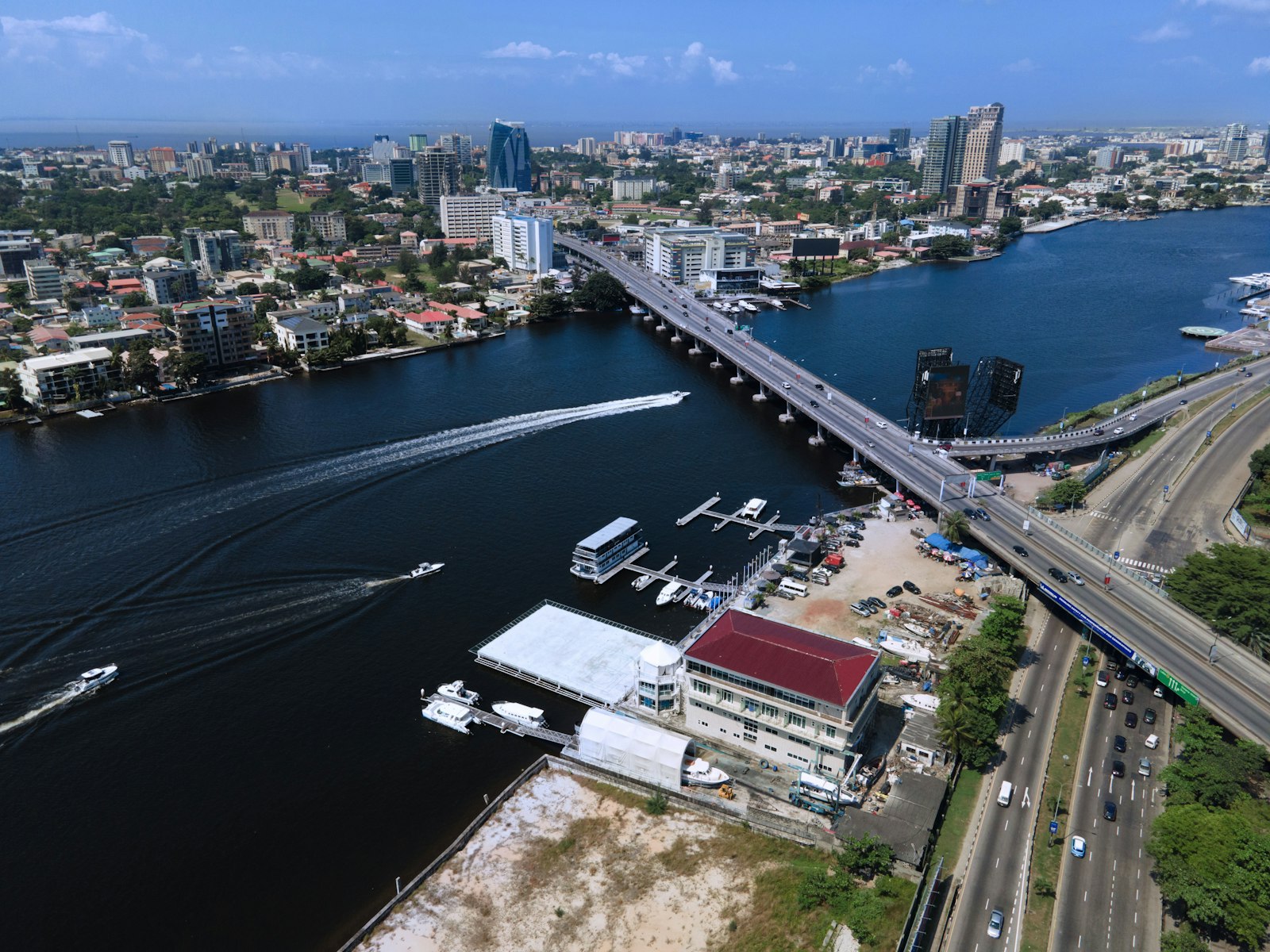
Banana Island is the ceiling of Lagos residential. It is reclaimed, gated and full of diplomats and executives, so you are renting an address as much as a flat. Ikoyi follows, driven by expatriate and corporate demand.
Ikeja GRA is the story of 2026. Its large old plots are being redeveloped into serviced blocks with pools, gyms, lifts and 24-hour power, and most of its current 3-bed listings now sit at ₦25m–₦35m. That puts it level with Victoria Island for new stock. Older GRA flats still let for less, with the cheapest current listings from about ₦12m.
Victoria Island and Oniru give you Island living with a wide spread between older blocks and new serviced towers. Lekki Phase 1 has the widest range on the list, from ordinary estate flats at around ₦10m to fully serviced units near ₦30m. Further along the Lekki corridor, in Ikate and Osapa, you are paying mainly for finish quality and estate security. On the Mainland, Magodo GRA Phase 2 and Maryland/Ilupeju are quieter and greener. Their best serviced units are creeping towards Island prices, but typical flats still let in single-digit millions.
What most “most expensive” lists leave out: the total package
Here’s the trap. A landlord advertises ₦20m, you budget ₦20m, and then you’re told the real number to move in.
The move-in package adds roughly 25–30% upfront. Lagos State’s Tenancy Law caps agency and legal fees at 10% each, but in practice you’ll pay agency (10%), legal/agreement (10%) and a refundable caution deposit (5–10%). On a ₦20m rent, that’s another ₦5m–₦6m (~$3,230–$3,870) before you sleep there one night. Current Ikeja GRA listings show the pattern: ₦35m rent, a ₦3.5m service charge and a ₦1m caution deposit, plus 10% agency and 10% legal.
The service charge is a second rent. On the Island and in premium Ikeja GRA blocks, expect ₦1.5m–₦4.5m a year (~$970–$2,900). In Lekki it is often ₦500k–₦2m, and in older Mainland compounds ₦300k–₦1m. Then ask the killer question: is it all-inclusive, or is there a separate diesel or electricity deposit? Many estates quote a service charge that covers everything except the power you actually use.
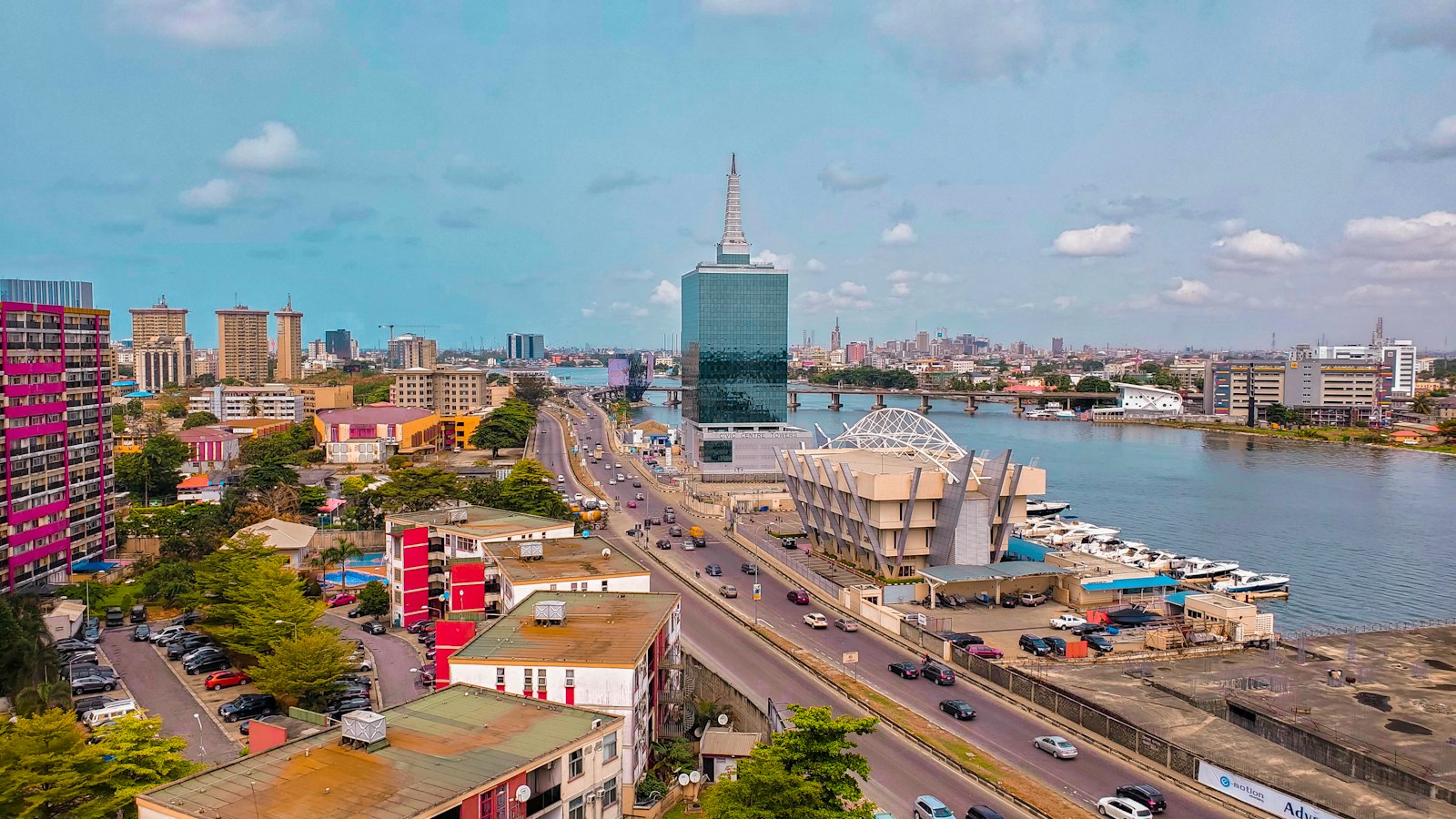
Watch out: “Two years upfront” is common at this level, and some Ikeja GRA listings now ask for it outright. It is a huge cash outlay. Negotiate for one year where you can, and never pay before you’ve seen the tenancy agreement and confirmed the agent actually represents the landlord.
Cheaper picks right next door
Priced out but set on the area? A few honest swaps: Ajah instead of deep Lekki, Gbagada or Maryland instead of Ikeja GRA, and Yaba or Surulere for Island access at Mainland money. You lose some prestige and get a serious chunk of your annual budget back.
Renting big, or wondering whether to buy instead? At these numbers, a few years of rent can rival a deposit. The LON Feasibility Studio will let you model rent-vs-buy and full project costs in naira and dollars.
Frequently asked questions
What is the most expensive area to rent in Lagos in 2026?
Banana Island in Ikoyi. Current listings put a 3-bedroom flat at about ₦35m–₦60m a year (~$22,580–$38,710), with listing averages in the mid-₦40 millions, plus heavy service charges. The rest of Ikoyi comes next.
How much is a 3-bedroom flat in Ikeja GRA?
Most current listings sit at ₦25m–₦35m a year (~$16,130–$22,580), driven by new serviced blocks with pools, gyms and 24-hour power. Older flats let for less, from about ₦12m.
How much is a 3-bedroom flat in Ikoyi?
Roughly ₦26m–₦40m a year (~$16,770–$25,810) for most listings in September 2026, with the listing average around ₦40m. Banana Island and new towers run higher.
Why is the rent I’m quoted never the final price?
Because of the move-in package: agency (10%), legal (10%) and caution (5–10%) fees on top of the rent, plus an annual service charge. Budget 25–30% above the advertised rent to move in, then the service charge on top.
Methodology & sources
Rent ranges show where most current asking rents for 3-bedroom flats sat on Nigeria Property Centre and PropertyPro in September 2026, using each platform’s area pages and listing averages. Asking rents are not agreed rents, and listings over-represent new serviced units. Treat these figures as a guide to the market, not a quote for a specific flat. Currency at ₦1,550/$. Fee structure per the Lagos State Tenancy Law and current listing terms. Last updated: 25 September 2026. Next review: March 2027. Journalists and researchers may cite this with attribution to LandsofNigeria.com.
Related reading: Most affordable Lagos areas for a 3-bedroom flat · Renting vs buying in Lagos: the real math · Hidden costs of buying a home in Nigeria · How much you should pay in agency fees · Island or Mainland: where should you live?

