
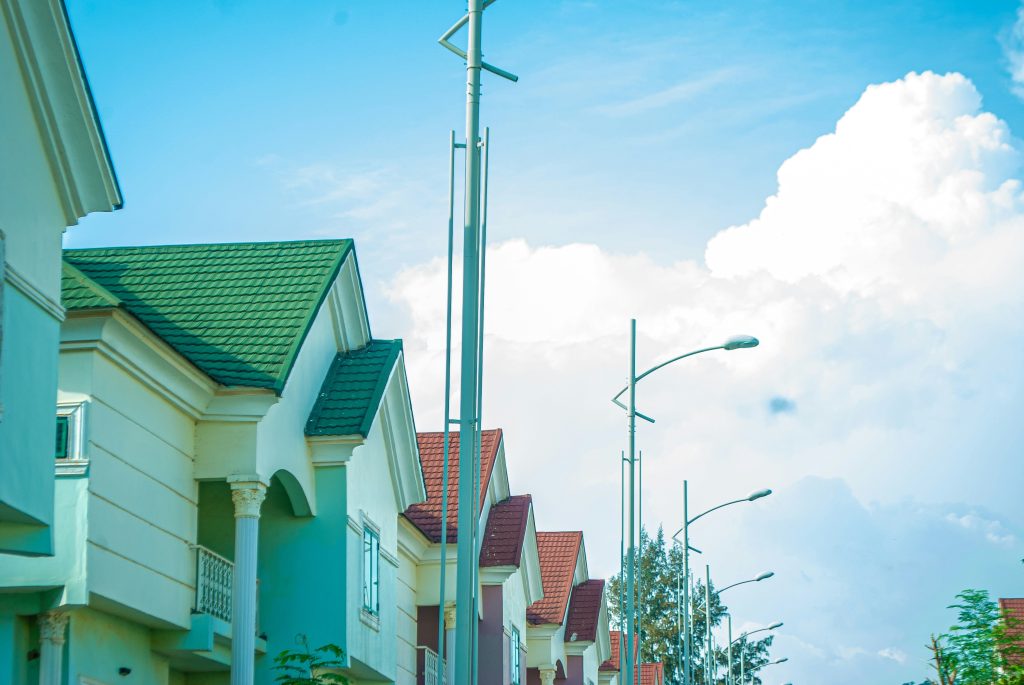

The federal government’s Renewed Hope housing programme is moving from press releases to keys: more than 2,000 units in Lagos are nearing completion (with the Federal Mortgage Bank funding about 1,500 of them), a 2,000-unit Renewed Hope City in Ibeju-Lekki is already taking sales, over 15,000 units are under construction nationwide, and the government has announced a plan for 77,400 social housing units plus new cities in Lagos, Abuja and Kano. Most are sold on mortgage or instalment terms via the NHF — financing at 9%, up to ₦50m (~$32,300) for diaspora buyers and a ₦85m (~$54,800) ceiling generally. Apply only through official channels, and verify your allocation before paying. (Figures at ₦1,550/$, August 2026.)
Every few weeks brings a fresh Renewed Hope headline. The useful question isn’t whether the programme is impressive — it’s how an ordinary buyer actually gets a home from it, and how not to get fleeced by someone selling a “slot” they don’t control. Here’s the practical version.
What’s actually built and selling
According to the Federal Ministry of Housing and Urban Development and reporting via the Guardian, delivery is genuinely underway in 2026: the Lagos Renewed Hope City is well advanced with units nearing occupation, thousands more are flagged off at Karsana in Abuja, and sales are open on some estates. This isn’t vapourware — but “under construction” and “ready to occupy” are different stages, so always confirm the status of the specific unit you’re offered.
Who qualifies, and how you pay
Renewed Hope homes are aimed at working Nigerians, including first-time and lower-income buyers, and are typically accessed on subsidised mortgage or instalment terms rather than one cash payment. The cheapest financing runs through the National Housing Fund: 9% interest, a general ceiling of ₦85,000,000 (~$54,800), and a dedicated diaspora window of up to ₦50,000,000 (~$32,300). Exact unit prices vary by type (studio to three-bed) and city — confirm the current price list for your estate directly with the ministry or FMBN, not from a promoter’s flyer.
How to actually apply
Go through official channels only: the Federal Ministry of Housing / Renewed Hope programme and FMBN for the mortgage side. Register, confirm your eligibility and NHF standing, select an estate and unit type, and get every figure — price, deposit, monthly repayment — in writing from the official source before you pay anything. If an “agent” wants cash to secure you a slot outside this process, that’s your cue to stop.
Watch out: A government housing scheme is a magnet for allocation scams. Common ones: “insiders” selling slots they can’t deliver, demands for cash deposits into personal accounts, and fake estates riding the Renewed Hope name. No legitimate allocation needs a bribe or an off-book cash payment. Pay only through official, receipted channels.
What the fanfare leaves out
Two honest points. First, a national target is not your house. “77,400 units” is a programme ambition; what matters to you is whether a specific, completed or credibly-progressing unit is genuinely allocated to you on terms you’ve verified. Second, even a government scheme needs due diligence. Confirm the allocation letter is real, the estate has approvals, and the payment goes to an official account. The Renewed Hope name lowers some risk, but it doesn’t remove your responsibility to check — the buyers who lose money are the ones who assumed the label did the checking for them.
Offered a Renewed Hope allocation? Verify before you pay. Our free checklist covers the allocation, approval and payment checks that separate a real government home from a costly impostor.
Frequently asked questions
Are Renewed Hope homes actually available in 2026?
Yes. Thousands of units are completed or under construction across Lagos, Abuja and other states in 2026, with sales open on some estates. Confirm the exact status and price of any specific unit before committing.
How do I apply for a Renewed Hope home?
Apply through the Federal Ministry of Housing / Renewed Hope programme and arrange financing via FMBN’s NHF mortgage. Register, verify eligibility, and get all terms in writing from official sources — never pay an agent cash for a “slot.”
How much do Renewed Hope homes cost?
Prices vary by unit type and city and are best confirmed on the official list. Most buyers pay via subsidised mortgage or instalments rather than cash; NHF financing runs at 9% up to a ₦85m (~$54,800) ceiling.
Can diaspora Nigerians buy Renewed Hope homes?
Yes — and the new FMBN Diaspora NHF Mortgage (up to ₦50m / ~$32,300 at 9%) is designed to help. As always, verify the specific property and pay only through official channels.
Sources: Delivery figures from the Federal Ministry of Housing and Urban Development, the Guardian and Nigeria Housing Market, 2026. Unit prices vary and should be confirmed officially. Naira figures converted at ₦1,550/$ (site planning rate; the naira traded near ₦1,364/$ officially in early August 2026). Published: August 7, 2026. Journalists and researchers may cite this with attribution to LandsofNigeria.com.
Related: FMBN’s Diaspora Mortgage: What to Check Before You Sign Up · Affordable Homeownership for Young Professionals · Nigeria’s 22–28 Million-Home Deficit Explained · Estate Developer Red Flags

