
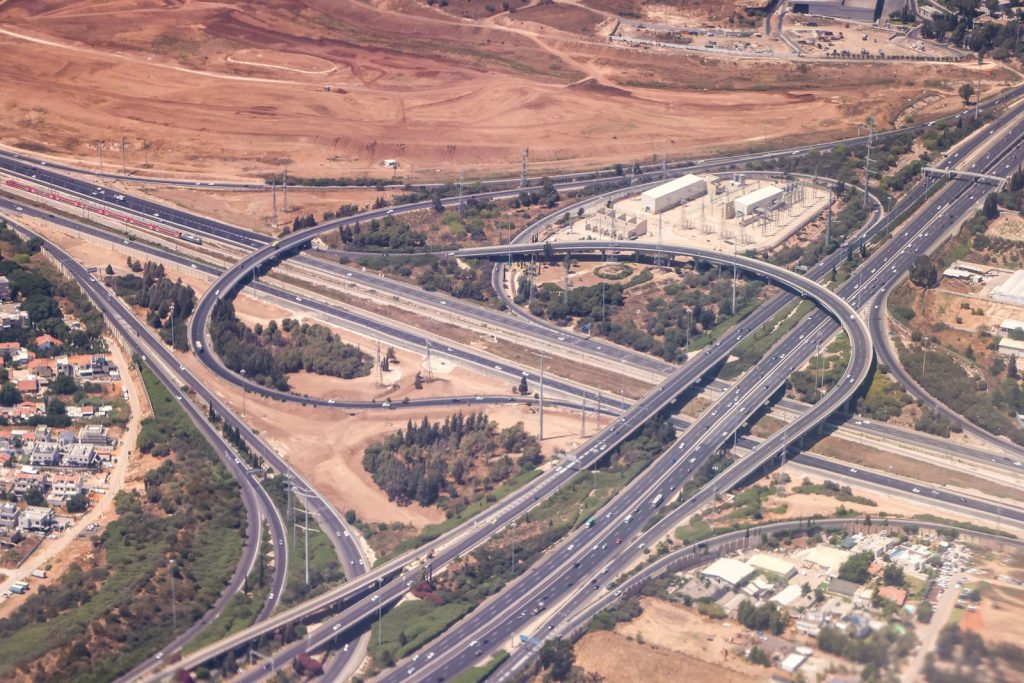

The infrastructure moving Nigerian land prices most in 2026 sits on the Lagos eastern corridor. Land within 5km of the Lagos-Calabar Coastal Highway has risen 25–40% since construction began, and Ibeju-Lekki — home to the Lekki Deep Sea Port and Dangote Refinery — is up roughly 300% over the past decade. Below: the seven projects doing the heavy lifting, what each is really worth to a buyer, and the one that’s still mostly a promise. (Land-value figures as of August 2026.)
Everyone tells you to “buy where the infrastructure is going.” Fewer people tell you which projects are actually being built, which are still slides in a presentation, and how much of the price jump has already happened before you get there. That last part matters — buying after a 300% run is very different from buying before one. Here’s the honest map.
| # | Project | Status (2026) | Area most affected |
|---|---|---|---|
| 1 | Lagos-Calabar Coastal Highway | Phase 1 under construction; section open | VI–Lekki–Ibeju-Lekki–Epe |
| 2 | Lekki Deep Sea Port | Operational | Ibeju-Lekki, Lekki Free Zone |
| 3 | Dangote Refinery & Lekki Free Zone | Operational | Ibeju-Lekki |
| 4 | Lekki-Epe International Airport | Under construction | Epe, Ibeju-Lekki |
| 5 | Lagos Rail (Blue & Red Lines) | Both lines operating; extending | Mainland, Okokomaiko, Agbado |
| 6 | Fourth Mainland Bridge | Proposed; not substantially built | Ajah–Ikorodu–Ogun border |
| 7 | Gateway Agro-Cargo Airport | Developing (Ogun) | Iperu–Ilishan-Remo, Ogun |
1. Lagos-Calabar Coastal Highway
This is the single biggest land-price story in the country right now. The full road is planned at about 700km; Phase 1 covers 47.47km from Ahmadu Bello Way in Victoria Island out to the Lekki Deep Sea Port and Dangote Refinery axis, with the first section opened in 2025. Parcels within 5km of the route have already gained 25–40% since construction started, per BusinessDay. If you’re buying here, the move is to look just beyond the obvious hotspots where prices haven’t fully caught up — and read our area-by-area breakdown of who’s actually gaining first.
2. Lekki Deep Sea Port
Operational since 2023, the Lekki Deep Sea Port is the anchor that turned Ibeju-Lekki from bush into the most-hyped land corridor in Lagos. Combined with the free zone, it’s a big part of why Ibeju-Lekki land has appreciated roughly 300% over the past decade. The catch: much of that gain is banked. Today you’re buying into an established story at established prices, so the discipline is title, not hype — see current numbers in our Ibeju-Lekki land price guide.
3. Dangote Refinery & Lekki Free Zone
The Dangote Refinery — the largest single-train refinery in the world — sits inside the Lekki Free Trade Zone and pulls jobs, workers and supporting businesses into the axis. Former works minister Babatunde Fashola noted in July 2026 that Lagos discounted land to secure the investment — a reminder that the value here was manufactured by policy as much as by the market. Rental demand from staff and contractors is the quieter opportunity for buyers who prefer cash flow to speculation.
4. Lekki-Epe International Airport
Under construction on the Ibeju-Lekki/Epe axis, the Lekki-Epe International Airport is the next catalyst that has speculators moving further east into Epe, where entry prices are still a fraction of core Lekki. Epe has quietly become one of the better value plays for patient buyers — the growth drivers and what to check are in our Epe land price guide. Just remember: an airport announced is not an airport open, so buy at a price that makes sense even if the timeline slips.
5. Lagos Rail (Blue & Red Lines)
Mass transit changes where people can afford to live, and Lagos finally has trains running. The Blue Line (Marina–Mile 2, operational since 2023) is extending toward Okokomaiko, and the Red Line opened its first phase from Oyingbo to Agbado on 15 October 2024, with talk of extending into Ogun State. Areas around new stations — Agege, Ikeja, Agbado, Okokomaiko — get more attractive to renters who commute, which supports both values and rental demand on the mainland, not just the islands.
6. Fourth Mainland Bridge
Here’s the honest one. The proposed 38km, ~$2.5bn Fourth Mainland Bridge — routed from the Ajah axis through Ikorodu to the Ogun border and the Lagos-Ibadan Expressway — would reshape land values across Ikorodu and eastern Lagos. But it has been “coming” since 2006, has missed several start dates, and as of 2026 is not substantially built. Land is already priced along the rumoured route on the strength of the promise. Our take: buy Ikorodu land on today’s fundamentals — access, title, real demand — and treat the bridge as a free bonus if it ever lands, not the reason you paid a premium.
Watch out: “along the coastal highway route” and “beside the new airport” are the favourite lines of Omo Onile and fake-estate sellers. Proximity to infrastructure does not fix a bad title — some of the hottest corridors are also the most disputed. Verify before you value.
7. Gateway Agro-Cargo Airport, Ogun
Outside Lagos, Ogun State’s Gateway Agro-Cargo Airport around the Iperu–Ilishan-Remo corridor is drawing early money into a lower-priced market, on the bet that cargo infrastructure pulls logistics and agribusiness. Prices here are still a fraction of Lagos, which is the appeal and the risk — the upside is real but so is the wait. We’ve mapped the investment case and the caveats in our Gateway Airport investor guide and the wider Ogun high-ROI areas.
What most “infrastructure land” guides leave out
Two things. First, timing beats location. The money in infrastructure land is made buying before the crowd prices it in — once a project is famous, most of the gain is gone and you’re the exit liquidity for an earlier buyer. Ibeju-Lekki’s 300% already happened; the next 300% won’t come from the same plot. Second, a promise is not a project. The Fourth Mainland Bridge has moved land prices for nearly twenty years without a single toll collected. Separate what’s being built (the coastal highway sections, the operating port, the running trains) from what’s being announced (bridges, airports on paper), and price each accordingly. Infrastructure raises land value — but only infrastructure that actually gets built.
Weighing two infrastructure plays against each other? The Feasibility Studio models appreciation scenarios and rental demand side by side on real Nigerian data, so you back the corridor that pays — not the one with the loudest advert.
Frequently asked questions
Which infrastructure project has raised Nigerian land value the most?
The Lekki Deep Sea Port and Dangote Refinery together drove Ibeju-Lekki up roughly 300% over the past decade. In 2026, the Lagos-Calabar Coastal Highway is the fastest active mover, lifting land within 5km by 25–40%.
Is it too late to buy near the coastal highway?
Not necessarily — much of the core has already jumped, but sections further along Phase 1 and toward Epe still have room. The key is buying just beyond the current hotspot at a price that reflects today’s reality, not next decade’s.
Should I buy land because of the Fourth Mainland Bridge?
Buy the land on its own merits — access, title, real demand — and treat the bridge as upside. It has been proposed since 2006 and is not substantially built as of 2026, so don’t overpay on the promise alone.
How do I avoid scams in these hot corridors?
Popular corridors attract the most title fraud. Insist on a registry search, a genuine survey plan and proper documentation before paying, and read our guide to the 12 common land scams.
Methodology & sources: project statuses and land-value figures compiled August 2026 from BusinessDay (coastal highway land prices), Nairametrics (Dangote/Fashola), and public records on the Lekki Deep Sea Port, Lagos Blue/Red Line rail and the proposed Fourth Mainland Bridge. Appreciation figures are area averages, not guarantees for a specific plot. Last updated: August 2026. Next review: November 2026. Journalists and researchers may cite this with attribution to LandsofNigeria.com.
Buying land in a hot corridor from abroad? Distance is where infrastructure hype does the most damage. Run every deal through the free checklist before you send a naira — get the free Land & Property Verification Checklist →
Related guides: Where to Buy Land in Lagos by Budget (2026) · Is Nigerian Land a Good Investment in 2026? · Ibeju-Lekki Land Prices (2026)
