
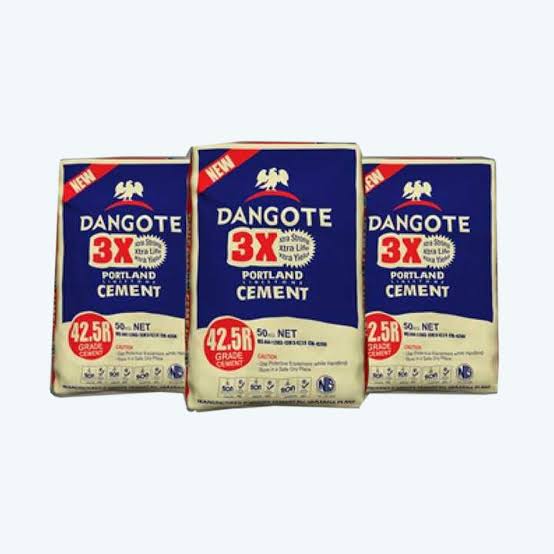

In August 2026, Dangote signed an $800 million+ deal with China’s Sinoma to double its Itori plant in Ogun State from 6 to 12 million tonnes a year. If you’re building, the honest takeaway is this: more capacity is good news for supply, but it won’t drop the price of your next bag of cement — which sits around ₦12,000–₦15,000 (~$8.30–$10.30) today. Expansions take years, and prices are driven more by energy, FX and demand than by one plant. Build your budget for today’s prices, not a promised discount. (Figures at ₦1,450/$, August 2026.)
Every time a big cement investment is announced, the same hope circulates: “prices will finally come down.” Let’s be straight about whether that’s true this time, because your build budget shouldn’t rest on a headline. Here’s what was signed, what it does, and what it means for the bag you’ll buy next month.
What Dangote actually signed
Dangote Industries signed a Memorandum of Understanding worth more than $800 million with Sinoma International Engineering to expand the Dangote Cement plant in Itori, Ogun State. The deal doubles the facility’s annual capacity from 6 million to 12 million metric tonnes. It fits the group’s Vision 2030 target of lifting total cement capacity to between 90 and 100 million tonnes a year, and the extra output is aimed at both domestic demand and exports across Africa.
The company tied the move partly to the Federal Government’s growing use of concrete in road construction. So this is real, large, and strategic — but it’s a plant expansion, which means construction, commissioning and ramp-up. That’s a multi-year timeline, not a next-quarter event.
Will it lower cement prices? The honest answer
Probably not soon, and here’s why. As the reporting itself notes, more supply does not automatically mean lower prices. Cement pricing in Nigeria is driven by a handful of forces, and plant capacity is only one:
| What moves cement prices | Direction in 2026 |
|---|---|
| Energy costs (gas, diesel for kilns & haulage) | Still high |
| Naira / FX (imported inputs & spares) | Firmer but volatile |
| Demand (govt concrete roads, housing push) | Rising |
| Domestic production capacity | Rising — but years out |
| Export pull (AfCFTA markets) | Rising — can tighten local supply |
Notice the tension: the same expansion built partly to serve exports can pull cement toward higher-paying markets. More capacity should ease supply reliability over the medium term and give big developers more certainty — but “medium term” and “big developers” are doing a lot of work in that sentence. For the individual builder buying 50 bags this month, the practical effect in 2026 is close to zero.
Worth knowing: Cement rose from roughly ₦8,000 a bag early in 2026 to around ₦12,000–₦15,000 by mid-year. A capacity expansion announced now doesn’t reverse that — the extra tonnes arrive years after the ribbon-cutting. Track the trend in our cement price update.
What builders should actually do now
Don’t wait for a discount that may not come. If you’re building in 2026, these moves protect your budget regardless of what Itori does:
1. Budget at today’s price. Cost your project at ₦13,000–₦15,000 a bag and treat any future drop as a bonus, not a plan.
2. Buy in phases, not all at once. Cement doesn’t store well for long in humid conditions — buy per stage to avoid spoilage and tied-up cash, unless you have a big, dry, secure store.
3. Lock quotes in writing. Get dated, written quotes from suppliers and contractors so a mid-project price jump doesn’t blow your budget.
4. Know your true quantity. Over-ordering is a quiet budget killer. Our guide to how much cement a house actually needs stops you buying blind.
5. Compare brands sensibly. BUA and Lafarge often sit a little below Dangote on price; buy on delivered cost and quality for your job, not brand loyalty.
Building this year? The LON Feasibility Studio will let you model your full build — cement, blocks, labour and land — at live 2026 prices before you break ground. It launches soon; join the founding list for early access.
The bigger picture for real estate
Zoom out and the Itori deal is a positive signal. More domestic production strengthens local manufacturing, supports the government’s infrastructure drive, and reinforces Ogun State as an industrial hub — which, over time, supports housing demand and commercial property around it. For long-horizon investors, that’s a plus. For the person mixing concrete next month, it changes nothing about the price. Both things are true. If you want the full picture on where building costs are heading, see our take on what’s really driving Nigerian construction costs in 2026 and the complete 2026 building & buying price library.
Frequently asked questions
Will cement prices drop after Dangote’s Itori expansion?
Not in the short term. The expansion adds capacity over several years and pricing depends heavily on energy, FX and demand. Budget for today’s ₦12,000–₦15,000 range.
How much will the expanded Itori plant produce?
The deal doubles annual capacity from 6 million to 12 million metric tonnes, part of Dangote’s plan to reach 90–100 million tonnes total by 2030.
What’s the cheapest cement brand in Nigeria in 2026?
It varies by location and haulage, but BUA and Lafarge frequently price a little below Dangote. Always compare delivered cost for your specific site.
Sources
Reported August 2026. Primary source: Nigeria Housing Market — “Dangote Cement Signs $800 Million Itori Expansion Deal”. Company: Dangote Cement. Price ranges reflect August 2026 market levels, converted at ₦1,450/$. Last updated: August 2026. Journalists and researchers may cite this with attribution to LandsofNigeria.com.

