
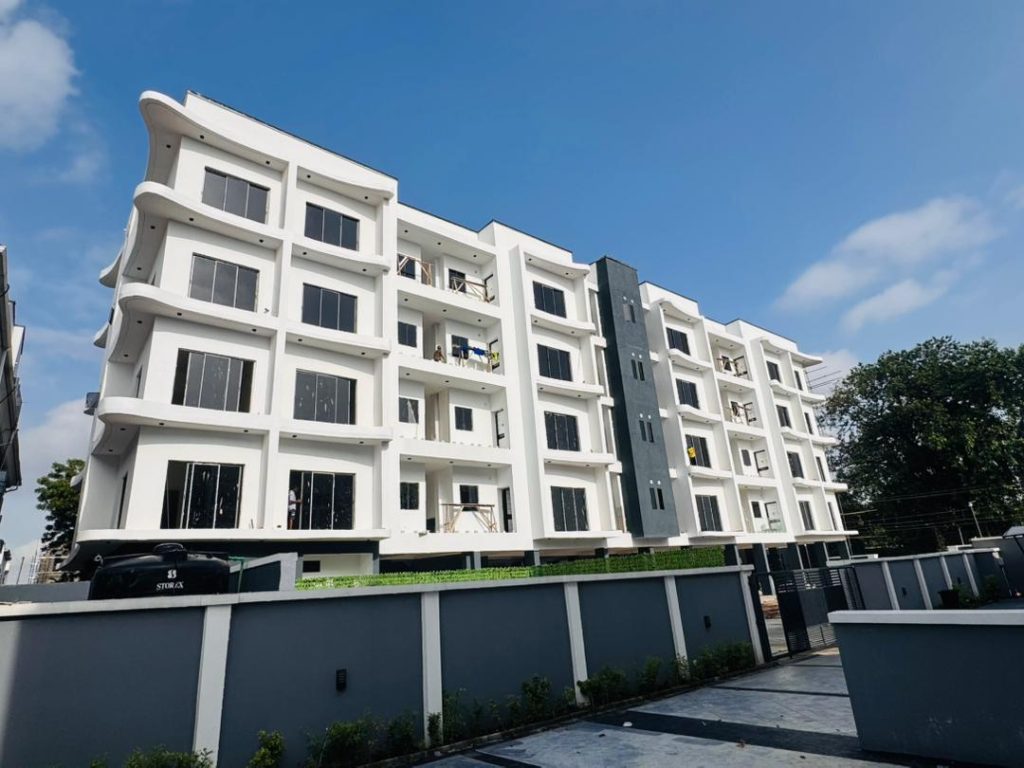

If you’re a diaspora buyer or a first-time developer, here’s the honest number: a standard 4-bedroom detached duplex costs roughly ₦75,000,000–₦140,000,000 (~$54,000–$100,000) to build in Nigeria in 2026, excluding land. A basic, roofed-but-unfinished shell can land around ₦40M–₦55M (~$29,000–$39,000); a high-end finish pushes past ₦160M (~$114,000). The single biggest swing isn’t the structure — it’s your finishing choices. (Dollar figures at ₦1,400/$, the working mid-point between the CBN official rate of about ₦1,340 and the parallel market’s ₦1,410 on 31 August 2026.)
Look, “how much to build a duplex” is the most-asked question we get from Nigerians abroad — and it’s also the one where people get quoted wild figures with no breakdown. So let’s do this properly. Every number below is a 2026 market range, dated and located, not a single fake-precise figure. Where a cost genuinely can’t be pinned down without your drawings, we say so.
What does a 4-bedroom duplex cost to build in 2026?
A 4-bedroom duplex on a standard 450–600 sqm plot, built to a decent-but-not-luxury standard, costs about ₦75M–₦140M (~$54,000–$100,000) in 2026, land not included. Cost rises with plot size, storeys of finishing detail, and city. Here’s the range by finish level:
| Build standard | What you get | Cost (₦) | ~ USD |
|---|---|---|---|
| Carcass / shell (roofed) | Foundation, walls, roof, no finishes | ₦40M–₦55M | ~$29,000–$39,000 |
| Standard finish | Basic tiles, POP, painting, fittings | ₦75M–₦95M | ~$54,000–$68,000 |
| Mid / premium finish | Quality tiles, wardrobes, good kitchen, borehole | ₦95M–₦140M | ~$68,000–$100,000 |
| High-end / luxury | Imported finishes, smart features, landscaping | ₦140M–₦180M+ | ~$100,000–$129,000+ |
Ranges reflect Lagos/Abuja mainland pricing, August 2026. Ibadan, Enugu and Port Harcourt typically run 20–30% cheaper than prime Lagos; Lagos islands and highbrow Abuja can run 15–25% higher.
Cost breakdown by construction stage
Builders and quantity surveyors split a duplex roughly like this. The percentages are consistent across the industry; the naira figures below assume a ~₦100M standard-to-mid build so you can see where your money actually goes.
| Stage | Share of build | Typical cost (₦) | ~ USD |
|---|---|---|---|
| Foundation & substructure | ~15% | ₦8M–₦15M | ~$5,700–$10,700 |
| Frame & walling (columns, beams, blocks, slab) | ~25% | ₦18M–₦30M | ~$12,900–$21,400 |
| Roofing (trusses, sheets, fascia) | ~12% | ₦7M–₦14M | ~$5,000–$10,000 |
| Finishing (plaster, tiling, POP, paint, doors, windows) | ~28% | ₦22M–₦45M | ~$15,700–$32,100 |
| Plumbing | ~10% | ₦8M–₦14M | ~$5,700–$10,000 |
| Electrical | ~10% | ₦8M–₦14M | ~$5,700–$10,000 |
Worth knowing: a waterlogged or sandy plot can add 40–60% to your foundation cost, because you’ll need a raft or piled foundation instead of a simple strip footing. Get a soil test before you budget — it’s the cheapest ₦150,000–₦400,000 you’ll ever spend.
How many blocks and bags of cement for a 4-bedroom duplex?
As a planning rule, a 4-bedroom duplex needs roughly 3,000–4,500 nine-inch blocks and 380–560 bags of cement from foundation through plastering, plus several tonnes of reinforcement iron. Your architect’s drawings move these numbers, so treat them as a budgeting guide, not a supply list.
With cement at ₦12,000–₦15,000 a bag in most Nigerian cities as of August 2026 (up from about ₦8,000 early in the year), cement alone on a duplex is roughly ₦5M–₦8.4M (~$3,600–$6,000). That’s why every ₦1,000 move in the cement price matters to your budget. If you’re self-building, see our cement-quantity guide for a 3-bedroom bungalow for how the maths is done stage by stage.
What most duplex estimates leave out
Here’s the part that turns an “₦80M” project into a ₦110M one. The headline quote almost always covers foundation-to-finish on the house only. It rarely includes:
- External works: perimeter fence, gate, paved driveway, drainage and landscaping — easily ₦8M–₦20M (~$5,700–$14,300) for a duplex plot.
- Water: a borehole and overhead tank runs ₦0.9M–₦3.5M. See our borehole cost breakdown.
- Power backup: generator or a solar/inverter system — often ₦2M–₦12M depending on size.
- Sewage: a soakaway and septic tank, ₦0.6M–₦1.8M.
- Approvals & professionals: building-plan approval, architect, structural engineer and QS fees — budget 5–10% of the build.
- The wahala tax: if you’re managing from abroad, factor in a project manager (5–10%) and a realistic 10–15% contingency. Materials and FX move monthly in Nigeria.
Costing a build from abroad? Our Feasibility Studio will let you model a full duplex budget — stage by stage, in ₦ and $, at live material prices — before you send a kobo home.
Duplex vs bungalow vs block of flats: which makes sense?
A duplex costs more per square metre than a bungalow because of the extra slab, staircase and taller structure — but it uses land far more efficiently, which matters on expensive Lagos plots. If your goal is rental income rather than a family home, a block of flats usually returns more per naira spent. For a like-for-like comparison, our 5-bedroom duplex cost guide shows how the numbers scale up.
How to protect your build budget (and your land)
The most expensive mistake isn’t over-paying for cement — it’s building on land you don’t fully own. Before any block goes down, confirm the title, the survey and the seller’s right to sell. We’ve catalogued the 9 costliest land-buying mistakes that wipe out build budgets. And whatever your finish level, get itemised written quotes from at least three contractors — the spread will shock you.
Frequently asked questions
Can I build a 4-bedroom duplex for ₦50 million in 2026?
Only to carcass (roofed shell) stage on a cheap-labour plot outside prime Lagos/Abuja. A finished, move-in duplex under ₦75M (~$54,000) in 2026 means very basic finishes and tight management.
How long does it take to build?
Typically 8–18 months for a self-funded duplex, depending on cash flow. Building in phases (a common Nigerian approach) spreads cost but lengthens the timeline and exposes you to material inflation.
Does the price include land?
No. Every figure here excludes land, which varies enormously — from a few million naira in a developing corridor to ₦100M+ on Lagos Island.
Is it cheaper to build or to buy a finished duplex?
Building is usually 20–35% cheaper than buying an equivalent finished duplex — if you can manage the project well and avoid title problems. Buying finished buys you certainty and speed.
Watch out: a contractor who gives you one round “all-in” number with no stage breakdown is a red flag. Reputable builders quote by stage and by material. If they won’t itemise, walk.
Buying the land first? Don’t send money on any plot until you’ve run the checks. Our free Land Verification Checklist walks you through title, survey and seller due-diligence step by step.
Methodology & sources
Cost ranges are built from 2026 Nigerian construction-industry estimates and current material prices, cross-checked against LON’s own cost guides. Cement pricing reflects nationwide retail of ₦12,000–₦15,000 a bag reported in August 2026 (The Guardian, 2026). Component-share percentages follow standard QS practice. Figures are estimates and will vary with your drawings, plot and city. Last updated: 31 August 2026. Next review: November 2026. Journalists and researchers may cite this with attribution to LandsofNigeria.com.

